Hey there, let’s talk about something that’s basically the unsung hero of your industrial pipeline, HVAC system, bridge, or power plant: expansion joints. I’m [your name here] with [your company name], and every single day at our shop, folks reach out asking how these weird, flexible rubber, metal, or fabric bits hold up when everything’s going in cycles—like a plant firing up and shutting down every day, or a highway deck expanding in summer and contracting in winter. If you’ve ever wondered why you don’t get a cracked pipe or a buckled bridge, this is why expansion joints aren’t just a “nice add-on”—they’re non-negotiable, and how they handle cyclic loading is make-or-break. Expansion Joints
First off, let’s keep it real: what even is cyclic loading for an expansion joint? It’s not just a one-time stretch. It’s that constant, back-and-forth movement. Think about it: a refinery runs at 300°F during operations, so its steel pipes heat up, expand a few inches, then cool down, shrink back, repeat—sometimes 5 or 6 times a day. Or an HVAC system turning on and off: the ductwork warms, swells, then cools, tightens. Even bridges: day to night, summer to winter, that deck moves up and down, side to side, thousands of times a year. Cyclic loading isn’t just small, either—it can be thermal expansion, pressure surges, vibration from pumps, or even seismic shifts that happen once but mess with the joint over time. The big risk here? Fatigue. That’s when a material gets stressed so many times it eventually cracks, leaks, or fails. And let’s be honest, a failed expansion joint isn’t a small fix—you’re looking at downtime, hazardous leaks, maybe even OSHA fines. So knowing how these things hold up under cycles is what we live and breathe as expansion joint suppliers.
Now, let’s break down how different types of expansion joints respond to cyclic loading, because not all are built the same. Our shop stocks three main types, and each has its own superpower (and weakness) when it comes to repeated movement.
First, rubber expansion joints. These are the ones you see on HVAC ductwork, water pipes, even wastewater lines. They’re made of stuff like EPDM, neoprene, or silicone—soft, flexible, can stretch a lot. When cyclic loading hits rubber, the key is how the rubber material handles “cyclic fatigue resistance.” We test every single batch here: we cycle our rubber joints thousands of times (like 10,000+) at different pressures and temperatures, and check for tiny cracks, called “microcracking.” Wait, but rubber’s not perfect—over time, repeated stretching can break down the polymer bonds, right? That’s called “crazing” or “flex fatigue.” That’s why we pick specific rubber compounds for different jobs. For example, EPDM is great for outdoor piping (sunlight, temperature swings) because it resists ozone and UV, so it doesn’t break down as fast from daily cycles. Neoprene is tougher for water, good for wastewater lines that have chemical residues. If you’re dealing with high cycles—like a pipe that runs 24/7 and cycles every hour—we’ll spec a reinforced rubber joint, with fabric or steel cord layers inside, to add strength. Those reinforcements stop the rubber from stretching too far too fast, so it doesn’t wear out. I’ve seen cheap rubber joints (the ones you buy at a hardware store for $20) fail in 6 months because they didn’t have that reinforcement—too many cycles, and the rubber just splits open. Our rubber joints are tested to handle 100,000+ cycles with minimal wear, so you don’t have to replace them every year.
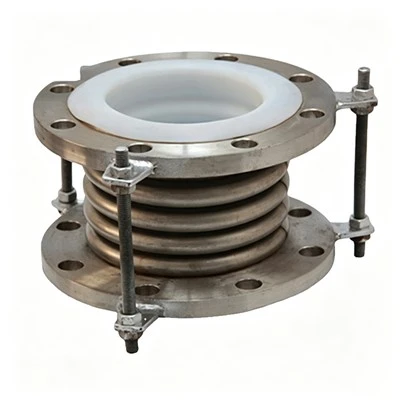
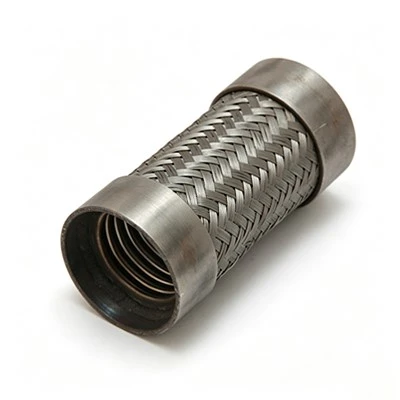
Next, metal expansion joints. These are the workhorses for high-pressure, high-temperature stuff—refineries, power plants, steam lines. They’re usually made of stainless steel, Inconel, or Hastelloy, thin corrugated tubes that flex. When metal joints handle cyclic loading, it’s a bit different than rubber. Metal’s strong, but it’s prone to “metal fatigue” from repeated bending or stretching. The corrugations are what give it flexibility, right? So each time the pipe expands, the corrugations flex back and forth, thousands of times. If you design it wrong, you can get a stress riser—a tiny crease in the corrugation where all the stress builds up, leading to a crack. That’s why we engineer every metal joint here to have smooth, rounded corrugations, not sharp angles, to spread out the stress. We also use “bellows” with multiple plies sometimes—inner corrugated layer, maybe a middle layer for pressure, outer layer for protection. That way, each ply takes a share of the cyclic load, so no single part gets overstressed. We do a thing called “fatigue testing” where we cycle a joint until it fails, so we know exactly how many cycles it can handle. For example, a standard 6-inch stainless steel metal joint might handle 500,000 cycles at 200 psi, but if it’s a high-alloy Inconel one for 1,000°F steam, it’s tested to 200,000 cycles because high temps make metal softer, so fatigue happens faster. I’ve heard of plants that tried to use off-the-shelf metal joints for their high-cycle steam lines, and they failed in 3 months—costing them $100k+ in downtime. We build ours to match the exact cyclic load your system sees, so that never happens to you.
Third, fabric expansion joints. These are the ones for big ductwork—power plant exhaust, industrial kilns, things that are super large, low pressure, high temp. They’re made of woven fabrics, glass fiber, ceramic fibers, sometimes with metal mesh reinforcement. When cyclic loading hits fabric joints, it’s more about how the weave holds up. Fabric is flexible, but repeated stretching can wear the fibers, cause fraying, or break the weave. That’s why we use tight, high-tensile weaves for fabric joints, and attach them with strong gaskets or metal bands that don’t loosen over cycles. We also add “insulation layers” sometimes, because if the fabric gets too hot, it breaks down faster, and cycles can make the insulation shift, leading to hot spots. Another thing with fabric joints: they handle lateral or angular movement way better than rubber or metal, which is key for big ductwork that moves a lot from wind or thermal cycles. But you can’t use fabric for high pressure—if your duct has more than 15 psi, fabric’ll blow out. That’s why knowing what kind of cyclic load your system has, and which joint fits, is huge. We’ve got fabric joints that handle 50,000 cycles at 1,200°F, perfect for a power plant’s exhaust stack, no problem.
Now, what factors actually affect how an expansion joint responds to cyclic loading? It’s not just the type of joint—there are a few other big ones. First, “cycle amplitude.” That’s how much the joint moves each cycle. If your pipe expands 2 inches, that’s a bigger amplitude than 0.5 inches, so more stress on the joint. If you have a system with large amplitude cycles, we’ll spec a joint with more corrugations (for metal) or thicker reinforcement (for rubber) to handle it. Second, frequency of cycles. A plant that runs 24/7 and cycles every hour has way higher frequency than a system that cycles once a day, so the joint wears faster. We calculate total “equivalent cycles” over the lifespan of your system—like, 10,000 cycles a year for 20 years is 200,000 total cycles—so we build the joint to handle that number. Third, operating conditions. Temperature, pressure, chemicals, even UV—all of these speed up fatigue. If your pipe has corrosive chemicals, rubber’ll break down faster, so we use a chemical-resistant compound, or a metal joint with a corrosion-resistant alloy. If it’s outside, sunlight breaks down rubber, so EPDM is better. I can’t tell you how many times a plant’s owner comes to us saying their old joint failed, and it turned out they used the wrong type for their conditions—no wonder it couldn’t handle the cycles.
Wait, let’s talk about a real-world example to make this concrete. Last year, a food processing plant hit us up. Their steam lines cycled every time they ran a batch—so 10 cycles a day, 300 days a year, that’s 3,000 cycles a year. They were using a cheap rubber joint from a local hardware store, and it was cracking after 6 months. Why? The hardware store joint had no fabric reinforcement, so the rubber was stretching too much each cycle, plus they used a general-purpose neoprene that didn’t handle the mild steam chemicals. We swapped them for our reinforced EPDM rubber joint, engineered for 100,000 cycles, and added a chemical treatment for the steam. 18 months later, they called to say it was still going strong, no leaks. That’s the difference between a supplier that knows how cyclic loading works, and one that just sells you the cheapest thing.
Another example: a small bridge project. They needed expansion joints for a road bridge that expands 1 inch in summer, contracts 1 inch in winter, 365 days a year, plus seismic cycles every 10 years. They tried to use a standard rubber bridge joint, but it failed in a year because the thermal cycles were too frequent, and the UV from the sun broke down the rubber. We suggested a combination: a metal expansion joint with corrosion-resistant steel, plus a protective rubber cover for the top, to handle the UV and the thermal cycles. It’s been 2 years, no issues.
Now, let’s get to the mistakes people make with cyclic loading and expansion joints. First, underestimating cycle frequency. Like, if you think your system cycles 100 times a year, but it’s actually 1,000, you’re gonna have a joint fail way sooner. Second, using the wrong joint type. Don’t use a rubber joint for high-pressure steam—it’ll blow out in cycles. Don’t use a metal joint for large, low-pressure ductwork—it’s overkill, and more expensive. Third, not maintaining them. Even the best joint needs a check-up. After a few years, you can get loose bolts, cracked rubber, or corroded metal. We recommend inspecting joints every 6 months, especially for high-cycle systems. If you see tiny cracks, replace it before it fails—way cheaper than downtime.
At the end of the day, expansion joints are all about absorbing that constant back-and-forth movement so your pipes, ducts, bridges don’t. How they respond to cyclic loading depends on the material, the design, and matching it to your specific system. We don’t just sell you a joint—we help you figure out exactly what kind of cycles your system has, what temperature and pressure, what chemicals, so you get a joint that lasts.
If you’re dealing with a failing expansion joint, or planning a new project, and need to make sure it handles all those cycles without breaking down—hit us up. We’ll work with you to spec the right joint, run the fatigue tests, and make sure you don’t end up with a $10k repair bill because a cheap joint couldn’t handle the cycles. No hassle, just honest advice from folks who’ve been in this for years.
Expansion Joints References:
- ASME B31.3 – Process Piping, American Society of Mechanical Engineers
- ASTM D412 – Standard Test Methods for Vulcanized Rubber and Thermoplastic Elastomers – Tension
- Metal Fatigue in Engineering, Suresh, S., John Wiley & Sons
- Expansion Joint Manufacturers Association (EJMA) Standards, 14th Edition
- Rubber Chemistry and Technology, Vol. 85, No. 3, 2012, “Flex Fatigue of Reinforced Elastomers”
Yixing Blog Pipeline Equipment Co., Ltd.
As one of the most professional expansion joints manufacturers and suppliers in China, we’re featured by quality products and good service. With abundant experience, we warmly welcome you to wholesale bulk expansion joints in stock here and get quotation from our factory. Customized orders are welcome.
Address: Zhizao Park, No.50 Chunjiang Road, Industrial Cluster Zone, Heqiao Town, Yixing City, Wuxi City, Jiangsu Province
E-mail: 1351116816@qq.com
WebSite: https://www.blogbellows.com/
