What is the dust resistance of a load cell? It’s a question I get all the time—from factory managers who deal with sawdust day in and day out, from packaging line operators sweeping fine powder off equipment, even from folks assembling agricultural gear where grain gets everywhere. And honestly? It’s way more than just “does a little dust get inside or not.” As a load cell supplier who’s been on the front lines with customers fixing dust-related issues, I’ve seen what happens when people overlook this: a $5,000 scale system going down mid-shift, production grinding to a halt, or even a bad batch of product because a load cell was giving wonky readings. Let me break this down like we’re chatting over a coffee, no stuffy engineering jargon that doesn’t mean a thing for your shop. Load Cell
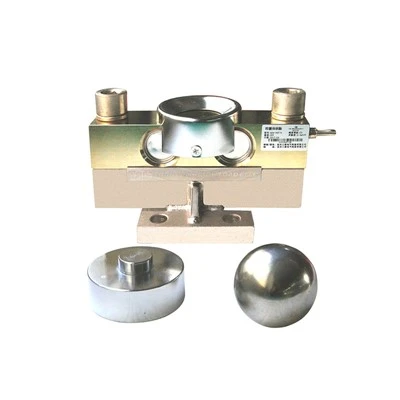
First, let’s start with the basics: what a load cell even does. It’s the heart of your weighing or force-measuring setup—whether that’s a tank weighing 100,000 lbs of chemicals, a conveyor tracking flour, or a crane lifting steel beams. When force hits it, the load cell bends just a tiny, tiny bit (like, smaller than the thickness of a human hair) and that movement turns into a reading you can use. Dust? Even the fine stuff—silica from concrete, powder from plastic pellets, flour, sawdust—doesn’t sound like a big deal, but here’s the catch: dust isn’t just a layer on the outside. It can get into the tiny gaps between the load cell’s internals and the outer casing, or clog the vents that let pressure equalize (super important for accurate readings when temperature changes). Over time, that dust acts like grit in a gear—abrasive, it can jam those tiny moving parts, or cause friction that makes the load cell think there’s more force on it than there actually is. Worse, if the dust is wet (say, grain dust gets damp from moisture in a silo), it cakes hard, locks the load cell up, and boom—you’ve got a $10k repair bill if not a full replacement.
So when people ask “how dust-resistant is a load cell?” they’re usually not asking for a vague answer. They want hard specs they can trust. That’s where the IP rating comes in—wait, let’s make that simple. IP stands for Ingress Protection, and it’s a two-number code. The first number is solids (that’s dust), the second is liquids (we’ll stick to dust here). A lot of guys I talk to just look for the highest first number—say, 6—and think that’s unbeatable. But here’s the secret no one tells you: an IP6X rating doesn’t mean zero dust ever gets in. It means “dust won’t get in enough to interfere with operation,” not “airtight.” The test for IP6X is blowing pressurized fine dust at the load cell for 8 hours, and no more than a tiny, negligible amount gets inside. That’s great for most industrial settings, but if you’re working with super fine, static-prone dust (like carbon black or pharmaceutical powder that’s so small it can stick straight through mesh), you might need something even tighter—maybe a hermetically sealed load cell, which is welded shut not just gasketed. I’ve had a customer in a battery plant tell me their old IP6X load cells were failing every 6 months because lithium dust was seeping past the gasket and building up on the strain gauges. Switched to the hermetically sealed ones, and they haven’t had a problem in 3 years. That’s the kind of on-the-ground stuff you don’t get from a spec sheet.
Wait, let’s talk about how load cells are built, because that’s what makes the dust difference. A cheap load cell might use a rubber gasket that hardens in 2 years from industrial fumes, or a casing with small gaps around the cable entry. A quality one (the kind we supply) uses a rubber or silicone gasket that’s tested to not break down in high or low temps, and a cable gland that’s tightened and sealed so tight even the tiniest dust particle can’t slip through. Also, some load cells have a desiccant inside—like a tiny little packet that absorbs moisture and traps any dust that does get in. That’s a game-changer for places with constant temperature swings, like outdoor conveyor systems where dew forms at night. I’ve seen customers skip the desiccant and their load cells corrode from dust plus moisture in a matter of months.
But here’s the thing: dust resistance isn’t a set-it-and-forget-it thing. Even the most durable load cells need a little maintenance, right? I tell my customers to do a quick check every 3 months—wipe the outside clean, make sure there’s no caked dust around the cable or casing, and test the zero reading to see if it’s off. A lot of guys think “if it’s IP6X, I never need to touch it” but that’s a mistake. I had a customer in a sawmill who ignored maintenance for a year, and his load cell got so clogged with sawdust that it read 1,200 lbs more than the actual weight of his log shipment. He had to pay a fee because the customer thought he was shorting them, and lost a long-term contract. That’s the kind of headache a $20 wipe-down could’ve avoided.
Let’s also bust a common myth: “all load cells with IP ratings are the same.” Nah, I’ve tested some cheap imports that say IP6X but fail the dust test in 2 hours. I once had a customer bring me a load cell he bought online for half the price—when I did a dust test, I had a cup of fine test dust and after 10 minutes, it was already coating the strain gauges inside. Why? Because the casing was stamped thin, the gasket was just a flimsy rubber ring that tore when we took it apart, and the cable entry was a loose hole, not a sealed gland. For folks who work in dusty environments, that’s a false economy. You might save a few bucks upfront, but you’ll end up replacing the load cell twice a year, and dealing with downtime that costs way more than the difference in price.
Another angle: different industries have different dust needs. If you’re in food and beverage, the dust is usually flour, sugar, or cocoa—stuff that’s fine, but not super abrasive. A good IP65 or IP67 load cell will work here, and it’ll even be washdown-ready (so you can spray the thing down with water, which is a bonus for food plants). But if you’re in mining or construction, you’re dealing with silica dust that’s like tiny shards of glass—those will cut through flimsy gaskets in no time. For that, you need a load cell with a thicker stainless steel casing, a metal-to-metal seal, and a higher IP rating—like IP68, which is even more dust-tight and can handle being submerged if it’s near a water source. I had a customer in a gravel quarry tell me his old load cells were failing because silica dust was eating through the gasket. Switched to our IP68 stainless steel ones, and the gasket is now made of a hardened neoprene that stands up to that abrasive dust. They’re still going strong after 2 years.
What about load cells used in outdoor settings, like truck scales? Those have to handle not just dust, but wind that blows dust from miles away. A lot of truck scale load cells are buried, so dust can build up around the base. We make sure those have a protective cover that’s sealed, and the cable is run through a rigid conduit so dust can’t crawl up the cable and into the load cell. I’ve seen truck scales that were out of service for a week because dust got inside and jammed the load cell—costing the operator thousands in lost revenue from trucks waiting to be weighed. That’s why when we supply truck scale load cells, we add a few extra seals on the base to prevent that kind of issue.
Now, let’s talk about what you should look for when you’re choosing a load cell for a dusty environment. First, don’t just go for the highest IP number—ask about the test standard. Some manufacturers make up their own “IPX6” that doesn’t meet the real test. We use the official IEC 60529 test, which is the international standard for ingress protection. Second, ask about the construction material. Stainless steel (316 is best for corrosion and abrasion) is way better than aluminum for dusty, harsh environments. Third, check the cable—if it’s a braided steel cable with a sealed gland, that’s way better than a plain PVC cable that can get holes from dust and debris. Fourth, if you’re working with super fine or explosive dust (like in a grain elevator where flour dust can ignite), you need an ATEX or IECEx rated load cell—those are designed to not cause sparks, and have extra tight seals to keep dust out that can build up and explode. I can’t stress that enough—ignoring explosive dust specs is a safety hazard, not just a performance issue.
Wait, I should mention a time I helped a customer fix a dust-related problem last year. A feed mill was having their batch scales giving inconsistent readings—sometimes 5 lbs off, which was messing up their animal feed formula. They’d already replaced two load cells in 6 months, and were frustrated. I went out to their plant, took a look, and noticed their old load cells had vent holes that were too big—they were letting fine feed dust get in, and caking on the strain gauges. We supplied them with load cells that had small, filtered vents (the kind that let air equalize but block dust), and added a little cover to protect the cable entry. Six months later, they called me to say the new load cells were working perfectly, no more inconsistent readings. That’s the kind of thing we do—we don’t just sell a product, we help you figure out what you actually need for your shop’s specific dust issues.
So, to wrap this up: dust resistance for a load cell isn’t a one-size-fits-all number. It’s about the IP rating, the construction, the industry you’re in, and how you maintain it. Cheap load cells with high IP numbers that don’t meet real standards will fail fast. Quality load cells built for dusty environments will save you money in the long run, less downtime, fewer repairs, and accurate readings every time.

If you’re tired of dealing with load cells that break down because of dust, or you’re not sure which one is right for your dusty application, reach out to us to talk through your needs. We can help you pick the right load cell that’ll stand up to your environment, no more headaches from dust-related failures.
Force Sensor References
- International Electrotechnical Commission (IEC). IEC 60529: Degrees of protection provided by enclosures (IP Code).
- American Society of Mechanical Engineers (ASME). Load Cell Design and Testing Standards for Industrial Weighing Applications.
- National Institute for Occupational Safety and Health (NIOSH). Dust Control Guidelines for Industrial Equipment.
Yixing Silvanus Electric Manufacture Co., Ltd.
With abundant experience, we are one of the most professional load cell manufacturers and suppliers in China. We warmly welcome you to buy bulk advanced load cell in stock here and get pricelist from our factory. All customized products are with high quality and competitive price.
Address: No.30 Fukang Road, Xinjie Street, Wuxi, Jiangsu, China
E-mail: jacky@silvanus.cn
WebSite: https://www.kunsens.com/
