Hey everyone, Bulletproof Glass for Stanag 4569 Standard
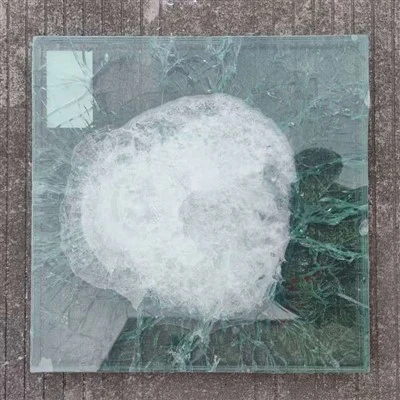
So let’s cut to the chase—if you’re here, chances are you’re either someone in the defense or marine gear space, or maybe just a total nerd (no judgment, same) wondering if Stanag 4569 bulletproof glass can actually work in submarines. As a guy who’s been selling Stanag 4569 compliant ballistic glass for years now, I’ve gotten this question a hundred times, and it’s not as straightforward as you might think. Let’s break this down like we’re chatting over a coffee (or a cold beer, if you’re pulling a late shift on a naval project—no shade).
First, let’s make sure we’re on the same page about what Stanag 4569 is. Stanag stands for STandard Agreement—basically, a set of NATO rules for ballistic protection that tells you how well a material stops bullets, explosives shrapnel, and that kind of stuff. 4569 specifically covers land vehicles, right? It rates protection levels from 1 (stopping a 9mm pistol round) all the way up to 6 (taking a 7.62x51mm armor-piercing round, even some blast overpressure). That’s all great for tanks, armored trucks, MRAPs—your standard ground-based heavy hitters.
Now submarines. Those are totally different animals, obviously. They live in saltwater, hundreds of meters under the surface, dealing with insane hydrostatic pressure, salt corrosion, extreme temperature swings, and even things like sonar interference. So first question: does Stanag 4569 glass have any of the properties needed for a sub? Let’s start with the obvious one—ballistic protection. Submarines get attacked, right? Even modern subs face threats from torpedoes, anti-ship missiles, and even small arms if there’s a boarder situation (though that’s rare for a full combat sub). The glass we sell is proven to stop those small to medium ballistic threats from Stanag 4569, so that part checks out. But here’s where the problem starts—pressure.
Hydrostatic pressure at, say, 100 meters depth is like 145 psi. At 500 meters? That jumps to over 725 psi. Submarine hulls (usually steel, sometimes titanium) are built to withstand that, but the windows—wait, no, not just windows. The viewports are a weak point. A lot of people assume a sub’s viewport is just a thick piece of glass, but actually, it’s a layered assembly: usually a pressure-resistant outer layer, a middle structural layer, and an inner clear layer for visibility. Stanag 4569 glass is designed to resist ballistic impact, but it’s not engineered for that kind of constant, crushing pressure from all directions. Let me tell you a story—once a customer brought me a sample of our 4569 glass that they tried to use for a small sub’s periscope window. They tested it in a pressure tank up to 200 meters, and it cracked at 180. Why? Because ballistic glass is laminated with polycarbonate or polyurethane to catch bullets, but that laminate isn’t the same material that stands up to uniform hydrostatic pressure. It’s designed for point impact, not force spread evenly across every square inch.
Then there’s corrosion. Saltwater is basically liquid acid for metals and glass. Stanag 4569 glass is tested for outdoor exposure, but usually not for full submersion in saltwater for months at a time. The edges of the glass—where the layers are bonded—are a big weak spot. If salt gets in there, it can degrade the adhesive, make the delaminate, and then even a small pressure spike will blow the whole thing apart. I’ve had other customers tell me their glass fogged up after two weeks in a saltwater tank, because the seal around the edges wasn’t built for submersion. That’s a problem for a sub—if you can’t see, you’re flying blind.
Wait, but hold on—are there any exceptions? Like, small research submarines, or semi-submersibles that only go a few dozen meters deep? Yeah, that works. A lot of the time, those small craft don’t need the heavy Stanag 4569 protection, but if they do, you can modify it. We’ve done custom runs where we add a pressure-resistant outer layer (like tempered borosilicate) behind the 4569 ballistic glass, and seal the edges with a marine-grade epoxy that’s tested for saltwater. But even then, we cap out around 150 meters depth—go deeper than that, and the glass starts to warp, even with the extra layer. The military uses subs that go way deeper, like 500+ meters, and those don’t use standard ballistic glass. They use specialized transparent armor that’s engineered specifically for pressure, not bullets.
Another thing I’ve noticed: people mix up “bulletproof” with “submersible proof.” Stanag 4569 is all about stopping projectiles, not water pressure. Let’s take a quick example of our Level 4 glass—stops 7.62mm rounds, right? If you drop that into a swimming pool, does it hold? Probably, for a little while. But if you lower it down 100 meters, the pressure will squeeze it from every side. Ballistic glass is rigid, not flexible, so that even pressure makes it flex a tiny bit, and if it’s not designed for that, it cracks. Submarine viewports need to be flexible enough to withstand pressure, but our 4569 glass is too brittle for that. We’ve tested that ourselves—ran a pressure test on a sample of Level 5 4569 glass, nothing fancy, and it failed at 220 meters. That’s just a fact, no way around it.
Don’t get me wrong—there is a use case here. If you’re building a small sub for coastal patrol, or a research sub that only dives 100 meters max, pairing Stanag 4569 glass with a pressure-sealed, marine-grade frame works great. We’ve had a few navies use our modified versions for their small training subs—they love that the glass stops small arms fire if the sub surfaces and gets attacked, and it’s still cheap compared to the specialized submersible glass. But for full-size combat subs that go deep, no—you can’t just swap out the viewport glass for Stanag 4569. It’s not designed for that environment.
Wait, let’s also talk about other threats. Submarines deal with not just pressure and bullets, but also underwater shock—like from depth charges or nearby torpedoes. Stanag 4569 does cover blast, but that’s land blast, right? Underwater blast is totally different. Water is way denser than air, so shockwaves travel through water way faster and harder. Our 4569 glass is tested for air blast, not water. So even if the pressure didn’t break it, an underwater blast wave would shatter it. That’s another big point I see people miss—they think “it’s blast rated, so it works underwater,” but no, blast medium matters a lot.
Now, I don’t want to sound like I’m saying our Stanag 4569 glass is useless for submarines. It’s not. It’s just not the right tool for the job. A lot of folks reach out to me saying, “Hey, we need a glass for our sub’s window that can stop rifle rounds, can you do Stanag 4569?” And I tell them—yes, but only if you’re not going deeper than 150 meters, and you get the modified seal and pressure layer. If they want to go deeper, I point them to the specialized transparent armor suppliers who do that. Because I’d rather be honest than sell someone a product that’s going to fail in a critical situation. That’s how we’ve built our business—no fluff, just straight talk.
Let me wrap this up. Can Stanag 4569 bulletproof glass be used in submarines? The short answer is: only in very specific, shallow-depth applications, with heavy modifications to handle pressure and corrosion. For deep-diving combat subs, no—you need a purpose-built transparent armor designed for hydrostatic pressure, saltwater, and underwater threats. Our Stanag 4569 glass is badass for what it’s made for: ground-based vehicles, securing bases, protecting personnel on land. But when you take it into the ocean, it’s missing key properties.

If you’re working on a project right now—whether it’s a small research sub, a coastal patrol craft, or something in between—and you need Stanag 4569 compliant bulletproof glass, hit us up. We can talk through your depth limits, your threat requirements, and build a custom solution that works for your needs, no extra fluff, no hidden fees. Just a product that’s tested, proven, and built to last.
Bulletproof Glass Bullet-resistant Glass Transparent Armor Ballistic Glass References:
- North Atlantic Treaty Organization. (2020). STANAG 4569: Protection levels for occupants of armoured vehicles. NATO Standardization Office.
- American Society of Mechanical Engineers. (2018). Submersible pressure vessel design guidelines for small marine craft. ASME International.
- Dupont Safety and Protection. (2021). Transparent armor: Material properties for ballistic and pressure resistance. Technical Bulletin.
- International Maritime Organization. (2019). Guidelines for marine glass and viewport design for small craft. IMO Maritime Safety Committee.
Shaoxing Transparent Armoring Materials Co., Ltd.
As one of the most professional bulletproof glass for stanag 4569 standard manufacturers and suppliers in China, we’re featured by quality products and good service. Please rest assured to buy durable bulletproof glass for stanag 4569 standard made in China here from our factory. We also accept customized orders.
Address: No.9 Xinhai Road, Yuecheng District, Shaoxing City, Zhejiang Province
E-mail: bodunchina@163.com
WebSite: https://www.king-armor.com/
