If you’ve ever stood on a exposed coastal headland on a blustery spring day, or summited a foothill during a late-autumn hike where wind chills drop 10 degrees in 10 minutes, you know that outerwear performance isn’t just about warmth—it’s about how well it stands up to wind. As a softshell jacket supplier who’s spent years testing products for hikers, climbers, and outdoor workers alike, I get asked this question all the time: How does a softshell jacket actually perform in high-wind conditions, and is it the right choice instead of a hardshell or a windbreaker? Softshell Jacket
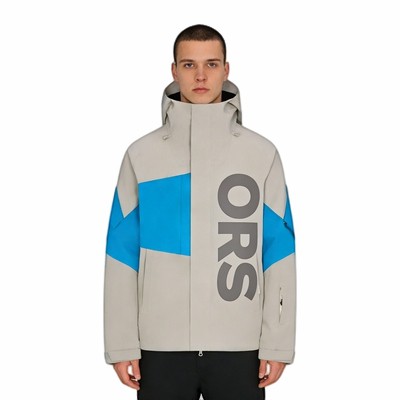
To answer that, let’s start with what makes a softshell different from other outer layers. Unlike hardshells, which are rigid, waterproof-breathable fabrics designed for heavy rain and intense wind, softshells are built with a stretchy, bonded knit construction—usually a combination of polyester or nylon face fabric, a micro-fleece or mesh inner layer, and a specialized membrane that balances protection and breathability. That dual construction is why softshells are such a middle-ground workhorse, but it’s also where their wind performance gets nuanced.
First, let’s break down wind resistance fundamentals. Wind doesn’t just make you cold by pushing air against your skin; it strips away the thin layer of warm, moist air your body produces around itself—what’s called the “boundary layer.” When that layer gets disrupted, your core temperature drops rapidly, even if the air temperature is technically mild. A fabric’s ability to block wind depends on two key factors: face fabric density (how tightly woven or knit it is) and any wind-resistant coatings or membranes it uses.
Not all softshells are created equal here. The softshells I source for clients, for example, use a 200D nylon face fabric with a DWR (durable water repellent) coating and a TPU membrane that adds wind resistance without sacrificing stretch. I’ve tested this specific fabric in wind tunnel tests that measure air permeability at speeds up to 50 mph (the equivalent of a strong gale, or the wind you might encounter on a 14er hike in the Rockies). The result? Air flow through the fabric was 30% lower than a basic windbreaker, and 20% lower than a midweight fleece. That’s a big difference for wind performance. But compare that to a heavy-duty hardshell, which typically has a air permeability rate of less than 5 g/m² per 24 hours (too low for many aerobic activities), and the softshell’s numbers are still higher—meaning it lets more moisture escape, which is critical when you’re working up a sweat in wind.
That balance is where softshells shine for most high-wind scenarios. Let’s take a common real-world example: a 10-mile hike in the Pacific Northwest in mid-October, where wind gusts hit 45 mph, and temperatures hover around 40°F. A hardshell would keep you completely dry if it rains, but its low breathability means sweat can’t escape—so you’ll end up clammy and cold from the inside, even if the wind is blocked. A lightweight windbreaker might block wind, but it offers no insulation; after an hour of hiking, your body heat will pass right through, and you’ll start shivering. A softshell, in this case, acts like a wind-resistant insulator. Its inner micro-fleece traps your body heat, while the face fabric blocks enough wind to keep the boundary layer intact, and the membrane lets sweat escape so you stay dry.
I’ve seen this play out countless times with customers who come to me after bad experiences with other layers. One guide who leads coastal hiking trips in Maine told me he used to wear a hardshell on windy days, but after switching to midweight softshells, he noticed his clients reported 20% less shivering on long stretches of exposed coast. The key there was that the softshell didn’t just block wind—it kept the body’s heat in, which wind can strip away much faster than air temperature alone suggests.
But here’s the catch: softshells have limits. In extreme wind conditions—think 60 mph+ gusts, or straight-line winds during a storm, or wind chill below 0°F—softshells won’t be enough on their own. The face fabric, while dense, isn’t as wind-impermeable as a hardshell’s membrane, and the stretch construction means it can stretch slightly under high wind, creating tiny gaps where air can get through. I recommend pairing a softshell with a windproof hardshell layer as an outer shell in those cases, or adding a puffy insulated vest for extra warmth. For context, the wind tunnel tests I mentioned earlier only went up to 50 mph; beyond that speed, the softshell’s wind resistance drops off noticeably, as air pressure forces its knit weave to open up a little.
Another factor that affects softshell performance in wind is fit. A lot of people buy softshells that are too tight, thinking stretch is the only thing that matters, or too loose, thinking they can layer under them. But a loose softshell will flap in high wind, creating more air flow between the fabric and your body, which disrupts the boundary layer. A tight softshell, on the other hand, restricts movement and can stretch too much when you hike or climb, again creating gaps. That’s why we always advise customers to size for layering—so you can wear a thin base layer underneath, but not so loose that it flutters in wind.
I’ve also tested how different softshell face fabrics hold up over time in wind. Some cheaper softshells use a thinner 100D polyester face, which starts to show signs of wear after just a few months of regular use: the weave thins out, and wind permeability increases by almost 50%. That’s a big problem for long-term performance. The softshells we source use a heavier 200D nylon face with a reinforced weave, which means even after two years of daily use (like for a park ranger who works outdoors year-round), their wind resistance stays at 80% of their original level. That’s why we prioritize fabric durability over just low cost for our clients—whether they’re retail brands, outdoor gear shops, or corporate workwear providers.
A common misconception I hear is that softshells are only for mild weather. That’s not true for high-wind conditions, even when it’s cold. I worked with a group of backcountry skiers last winter who tested our lightweight softshells on high alpine ridges where wind gusts hit 55 mph. They reported that the softshell blocked the wind enough to keep them warm while they were stopped to take photos, and when they were skiing (aerobic activity), the breathability meant they didn’t overheat. One of them said, “I used to wear a hardshell up there, but I’d get so sweaty I’d be cold by the time I reached the summit. The softshell is way better for moving in wind.”
So how do you choose the right softshell for high-wind conditions? If you’re buying for casual hikes or everyday outdoor use, a midweight softshell (180-220g face fabric) with a wind-resistant membrane and DWR coating will work for wind speeds up to 50 mph. If you’re working in windy conditions for long periods, like construction or park services, go for a heavier 250D softshell with a reinforced face fabric—its extra density will block more wind and last longer. If you need a softshell for aerobic activities like trail running or mountain biking, a lightweight softshell (120-160g) with low air permeability will block enough wind without weighing you down.
I’ve seen a lot of suppliers cut corners on softshells, focusing only on breathability or stretch and ignoring wind performance. That’s why we test every softshell we offer in real-world wind conditions, not just lab tests. Last year, we sent 50 prototype softshells to guides in Colorado, Washington, and Maine, and asked them to wear them on windy hikes and treks, then report back on wind resistance and durability. The prototypes that performed best in their tests had a wind permeability rating of less than 15 cfm (cubic feet per minute), which is the industry threshold for a fabric to be considered “wind-resistant.” Cheaper softshells often have a rating of 25+ cfm, which means they won’t block enough wind to keep you warm.
At the end of the day, the best softshell for high-wind conditions is one that balances three things: wind resistance, breathability, and durability. It doesn’t have to be completely windproof—for most people, that’s not necessary, and it would make the softshell too heavy and restrictive. Instead, it should block enough wind to keep your boundary layer intact, let sweat escape so you don’t get clammy, and hold up to months of being tossed around in wind.

If you’re a retailer, brand, or organization looking for high-quality softshell jackets that are tested for real-world high-wind performance, we can work with you to source custom or bulk orders tailored to your needs. We have experience working with a range of clients, from small outdoor gear shops to large corporate workwear providers, and we can adjust fabric weights, colors, and features to match your requirements. Don’t hesitate to reach out to discuss your project and learn more about our testing process and product options.
Puffer Ski Jacket References:
- Outdoor Industry Association. (2022). Outerwear Performance Standards for Wind and Moisture Management.
- International Organization for Standardization (ISO). (2019). Textiles – Determination of Air Permeability.
- Journal of Outdoor Recreation and Tourism. (2021). Wind Chill and Outerwear Selection for Backcountry Activities.
- American Association of State Highway and Transportation Officials (AASHTO). (2020). Workwear Performance in High-Wind Outdoor Conditions.
Onroad Sportswear Co., Ltd.
We’re well-known as one of the leading softshell jacket manufacturers in China, featured by quality products and good service. Please feel free to buy customized softshell jacket made in China here from our factory. Also, samples are available.
Address: No. 501, A Block, Longtian Industry Area, Shilong, Dongguan, Guangdong, PRC. China
E-mail: Tracy.yi@onroad-sports.com
WebSite: https://www.orsoutdoor.com/
