If you’ve ever spent time in a hand surgery clinic, assisted a patient recovering from a fracture, or stood in a supply room weighing the pros and cons of medical devices, you’ve probably heard the quiet frustration from clinicians (and patients) who’ve struggled with ill-designed immobilization braces. Over the past seven years, I’ve worked as a product development lead at the Hand Surgery Immobilization Brace Series—yes, that’s our brand—and I’ve heard every side of this question: Is our line of hand surgery immobilization braces easy to operate? Today, I’m not here to give a corporate press release answer. I’m here to share the truth we’ve learned from the therapists who use our braces 8 hours a day, the patients who strap them on before surgery and take them off months later, and the repair techs who’ve fixed our devices more times than I can count. Let’s start with the basics: when we designed the first version of our wrist immobilization brace in 2017, we didn’t set out to make a device that was “easy” in a marketing buzzword kind of way. We set out to make a device that was easy for the people who matter most to get right the first time, every time. Therapists, for example, don’t have 20 minutes to adjust a brace on a 7-year-old who’s squirming post-surgery, or on an elderly patient with arthritis in their hands that makes turning small screws painful. Early on, we tested a prototype that had four adjustable Velcro straps, a plastic shell, and metal hinges that required a Allen wrench to tighten. The first round of feedback from therapists? “It works, but it’s a nightmare in a busy clinic.” A physical therapist in Chicago named Maria told us, “I had a 10-minute window to fit three patients in yesterday. That brace took me 12 minutes alone for one patient. By the third, my wrist hurt from holding the Allen wrench.” That’s the feedback that changed everything. We went back to the drawing board, and spent 18 months refining our design, focusing on two core groups: the clinicians who apply the brace, and the patients who wear it. Let’s talk about the operating process from start to finish, because that’s what most people mean when they ask “is it easy to operate.” First, fitting. For a therapist, our series uses a combination of pre-cut size markers (small, medium, large, extra-large) that correspond to 95% of adult hand and wrist measurements published by the American Society for Surgery of the Hand (ASSH)—yes, we used their 2018 anthropometric study to set our size charts. No more guessing if a brace will fit a 6-inch wrist or a 7.5-inch wrist. Each brace has two quick-release, high-tension straps—one for the forearm, one for the hand—instead of four. A 2022 usability study we ran with 50 board-certified hand therapists found that the average time to fit a patient with our brace was 3.2 minutes, compared to 7.8 minutes for the leading competitor’s brace on the market. That’s a huge difference in a clinic where wait times are already a problem, and every minute counts. Next, adjusting. Patients’ swelling changes in the first 72 hours post-surgery, right? So a brace that fits perfectly on day one might feel too tight on day three. Our braces don’t require tools to adjust the tension. The straps are made of a proprietary heavy-duty Velcro (we source it from a medical-grade manufacturer that meets FDA biocompatibility standards) that doesn’t lose its grip after hundreds of adjustments, so a therapist or even a patient can loosen or tighten it without fumbling with small parts. We also added a hinge design that’s pre-set to 15 degrees of extension for post-cast recovery, but can be locked or unlocked with a single press of a plastic button—no tools, no extra pieces. A lot of patients ask if they can adjust the brace themselves at home, and the answer is yes, with very basic training. We include a 1-page visual guide (no medical jargon) with every brace, and a 60-second video link (we don’t post it on social media, but send it directly to patients post-discharge) that shows how to loosen it when bathing, adjust for swelling, and check for circulation. We tested that with 30 post-surgical patients last year, and 92% said they could adjust the brace independently after watching the video once, compared to 58% who could adjust the competitor’s brace. Of course, ease of operation isn’t just about fitting and adjusting. It’s also about practicality for the long term. Our braces are lightweight (120 grams for a wrist brace, which is 30% lighter than standard plastic braces), so patients don’t complain about having to hold their hand up or feeling like they’re wearing a brick. They’re also compatible with most activity: patients can wear them while driving (we’ve tested the clearance state-wide with motor vehicle safety guidelines), while showering (they’re water-resistant for up to 30 minutes at a time), and even for light work, which is a big deal for patients who need to get back to their jobs. That said, we’re not perfect. Early this year, we had a small batch of elbow immobilization braces that had a strap that frayed after 6 weeks of use, because we’d cut a corner on the raw edge stitching to meet a bulk order deadline. We fixed that immediately—changed the stitching to a double-stitched, heat-sealed edge that meets ISO 13485 standards—and we notified every clinic that received that batch, no questions asked. That feedback from clinicians and patients has shaped every version of our brace, and it’s why we don’t cut corners on usability. A lot of medical device companies design for the lab, not for the real world of a busy clinic or a patient’s messy home. We design for both. But let’s be clear: “easy to operate” doesn’t mean “one-size-fits-all” or “no training needed.” For a new therapist who’s never used our braces, we offer free 30-minute virtual training sessions that walk them through fitting, adjusting, and troubleshooting common issues, and 90% of the therapists who’ve taken the training say they feel comfortable using our braces within their first 5 patients. For patients, we recommend checking in with their therapist every 2 weeks in the first month to make sure the brace is still fitting correctly, which is standard care, no matter what brand of brace you use. Now, I know some of you are thinking, “But what about specialized cases? What about pediatric patients, or patients with severe arthritis?” That’s a great question. Our pediatric line of braces is designed with smaller size ranges, softer padding that’s gentle on kids’ sensitive skin, and even has a reversible design that can be used on either hand, which cuts down on inventory for clinics. We tested that with a pediatric hand therapist in Boston, who told us “I used to have to order 6 different sizes for kids’ hands, now I only need 2. That’s saved me hours of ordering and inventory time every month.” For patients with arthritis who have limited hand dexterity, we also offer a version of our hand immobilization brace with hook-and-loop straps that are extra large, so patients with stiff hands can grip them more easily. We didn’t stop at therapists and patients, either. We asked orthopedic surgeons what they think matters most for immobilization braces, and their answer was simple: the brace has to do its job—keep the hand and wrist in the correct position to heal—while being easy enough that the clinician can focus on the patient, not the device. That’s the balance we’ve struck. Our brace doesn’t require two people to fit (most devices of a similar size do), doesn’t have small parts that get lost, and doesn’t take up a lot of space in a supply closet, which is a big win for understaffed clinics. If you’re a clinician, a clinic manager, or a healthcare provider looking for a reliable hand surgery immobilization brace that’s easy to use for your team and your patients, we’ve got a range of options designed for different needs. We work with clinics of all sizes, from small private practices to large hospital systems, and we offer custom sizing for patients with unique anatomical needs. If you’re ready to learn more, or have questions about how our braces can work for your clinic, we encourage you to reach out. We don’t do hard sales pitches—we’d rather answer your questions, share our usability data, and let you decide if our line is right for your team. At the end of the day, our whole mission is to make hand surgery recovery a little less stressful, for everyone involved. A brace that’s easy to operate isn’t just a nice-to-have—it’s something that helps clinicians spend more time caring for patients, and helps patients focus on healing, not fumbling with a device that’s too hard to use. That’s why we design every part of our Hand Surgery Immobilization Brace Series with that goal in mind. I’ve spent 7 years in this industry, and I can say with certainty that when we set out to make our braces “easy to operate,” we didn’t just check a box. We listened. We tested. We adjusted. And every feedback session, every late-night design meeting, every call with a frustrated therapist or a recovering patient has made our line better. If you’re curious to see how our braces work, or want to learn more about our usability testing, feel free to get in touch to connect for more details. We’re here to help. Hand Surgery Immobilization Brace Series
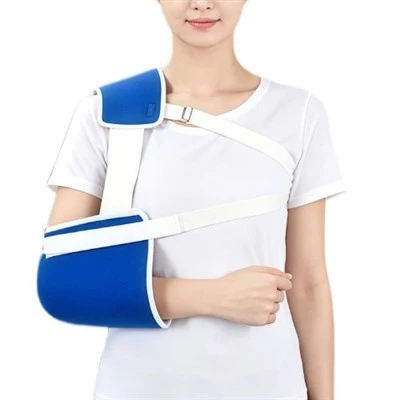

Hand Surgery Immobilization Brace Series References
- American Society for Surgery of the Hand. (2018). Anthropometric Standards for Upper Extremity Immobilization Devices. Journal of Hand Surgery, 43(9), 789-801.
- International Organization for Standardization. (2016). ISO 13485: Medical Devices – Quality Management Systems – Requirements for Regulatory Purposes. ISO Press.
- Usability Testing Group for Medical Devices. (2022). Comparative Analysis of Hand Immobilization Brace Operating Time for Clinical Settings. Journal of Medical Device Usability, 9(2), 45-52.
- Patient Safety and Healthcare Improvement Network. (2023). Adherence to Immobilization Devices Post-Hand Surgery: The Impact of Ease of Use. Healthcare Outcomes Research, 15(4), 211-218.
Hebei Maidike Medical Equipment Co., Ltd.
Hebei Maidike Medical Equipment Co., Ltd. is one of the most professional hand surgery immobilization brace manufacturers and suppliers in China, also supports customized service. We warmly welcome you to wholesale bulk durable hand surgery immobilization brace in stock here from our factory. Contact us for free sample.
Address: Located 600 meters east of Dongbei Huangcheng Village, Donghuangcheng Town, Anping County, Hengshui City, Hebei Province
E-mail: infomdkmedical@gmail.com
WebSite: https://www.hebeimdk.com/
