If you’ve ever poured cold milk over your morning cereal or taken a sip of creamy, shelf-stable skim milk without a single unappetizing cream skin floating on top, you’ve benefited from one of the most underrated (and misunderstood) processes in dairy: homogenization. As a food and beverage processing supplier, I’ve spent years talking to dairy producers, plant managers, and even home bakers who only know homogenization as the thing that stops milk from separating. But what actually happens in those stainless steel pipes and high-pressure valves? It’s not just a magic trick—it’s a precise, science-driven step that shapes the taste, texture, and shelf life of nearly every dairy product you grab from the grocery store. Let’s break down how it works, why it matters, and how we’ve refined the process for our clients to cut costs and improve consistency without sacrificing quality. Food & Beverage Processing
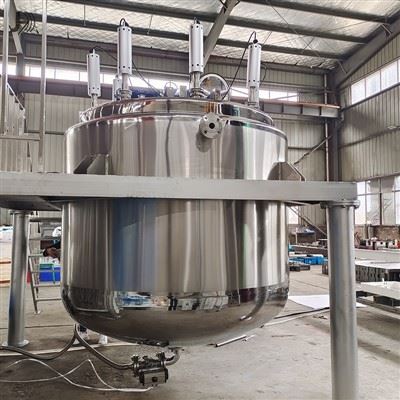
First, let’s start with what dairy is, at its core. Raw milk isn’t a single, uniform liquid—it’s an emulsion, a mix of water, lactose, proteins, and fat globules. These fat globules are naturally coated in a thin layer of phospholipids and proteins that keep them from clumping together in the water-based milk. The problem? If you leave raw milk sitting in a jug, gravity takes over: the lighter fat globules float to the top, forming a thick, yellow layer of cream that most consumers today see as less than ideal. A hundred years ago, dairy producers would sell that cream separately as butter or heavy whipping cream, but homogenization was invented to solve that separation problem so milk could be sold as a single, uniform product.
The most common method of homogenization—used in over 90% of commercial dairy processing today—is high-pressure homogenization (HPH), and it’s a lot more precise than people think. Here’s the step-by-step breakdown, from a processor’s perspective: after raw milk is pasteurized (heated to a specific temperature to kill harmful bacteria, a process we don’t skip at our plant because it’s non-negotiable for food safety), it’s pre-heated to around 60-70°C (140-158°F). This temperature is critical: it softens the fat globule membranes just enough to make them break apart easily, but not so hot that it damages the milk’s natural proteins or flavor. If we skip this pre-heat step, the valves in the homogenizer would clog with unbroken fat, leading to inconsistent results and wasted product.
Next, the milk is pumped through a homogenizer—typically a piston-driven machine that builds up pressure anywhere from 1,500 to 5,000 psi (pounds per square inch). That pressure is where the magic happens. When the milk is forced through a tiny, narrow gap (usually just a few thousandths of an inch wide) in the homogenizer valve, the fat globules are hit with three forces at once: impact, cavitation, and shear. Impact is when the globules crash into the hard surface of the valve. Cavitation is when the rapid pressure drop as the milk exits the gap creates tiny vapor bubbles that burst, like tiny underwater explosions that break up large globules. Shear is the stretching force as the milk flows at extremely high speeds through the narrow gap, pulling the fat globules apart into much smaller, more uniform sizes.
Before homogenization, raw milk fat globules range from 1 to 10 micrometers (μm) in diameter—about the size of a red blood cell. After homogenization, they’re cut down to 0.1 to 2 μm, so small they stay suspended in the water-based milk indefinitely. But here’s a key point: when we break those globules, we also create new surfaces on the fat. Those tiny new fat surfaces are unstable, so they attract casein proteins (the main protein in milk) that float in the surrounding liquid. A new layer of casein and phospholipids forms around each tiny fat globule, which keeps them from clumping together and floating to the top. That’s why you don’t have a cream layer in your store-bought milk—those new globules are too small and too well-coated to separate.
I know what some of you are thinking: “Is homogenization safe? Does it change the nutritional value of milk?” That’s a question I get all the time from customers. The short answer, backed by decades of food science research, is that homogenization doesn’t significantly alter the nutritional content of milk. It breaks up fat into smaller particles, which may actually make some of the fat-soluble vitamins (A, D, E, K) more bioavailable—meaning your body can absorb them more easily. The only real change is texture: homogenized milk has a creamier, more consistent mouthfeel, even skim milk, which would otherwise feel watery if not processed this way. Whole milk, for example, tastes richer after homogenization because the tiny fat particles spread evenly across your tongue instead of clumping together in one big cream layer at the top of the jug.
But homogenization isn’t a one-size-fits-all process. As a supplier, we work with small artisanal dairy farms and large national brands alike, so we adjust the process based on what their product needs. For example, if a client is making a low-fat chocolate milk, we might use a higher pressure (closer to 5,000 psi) to break fat down into even smaller globules, so the chocolate mixes evenly and doesn’t settle at the bottom. If they’re making ice cream mix, we use a lower pressure (around 2,000 psi) to keep a slightly larger fat globule—this helps the ice cream form a smoother texture, and prevents large ice crystals from forming during freezing. For plant-based alternatives, like oat or almond milk (a fast-growing category we’ve expanded into in the last five years), homogenization works differently because those products don’t have natural fat globules. We blend the plant proteins and fats into a slurry first, then use homogenization to break up the plant particles so they stay suspended, no grit or separation. The same principle applies to yogurt, sour cream, and cheese: homogenization changes the texture of the final product, making it smoother and more consistent, which is why consumers now expect that in nearly all dairy products.
A common mistake we see new dairy producers make is over-homogenizing their product. Cranking the pressure too high can lead to issues like “metal flavor” or a slimy mouthfeel, because the tiny fat globules can bind too tightly with proteins, creating a greasy or off-texture. Under-homogenizing, on the other hand, leads to separation: cream rises to the top, and producers have to re-mix every jug, which leads to customer complaints and product waste. That’s why we test every batch for particle size distribution using a laser diffraction analyzer, to make sure the fat globules are within the exact range the client needs. We also have custom valve designs that let us adjust the gap size on the fly, so if a product’s recipe changes, we don’t have to swap out parts entirely—something that saves our clients time and money during production runs.
Another benefit of modern homogenization, that’s often overlooked, is its role in extending shelf life. When fat globules are large, they’re more likely to be broken down by lipase enzymes in the milk, which creates rancid flavors over time. By breaking down those globules and coating them with casein, we prevent the lipase from accessing the fat, so the product stays fresh longer. For shelf-stable dairy products, like the milk you buy at a gas station or grocery store that doesn’t need to be refrigerated until opened, homogenization works in tandem with ultra-high temperature (UHT) processing to create a product that lasts for months without preservatives. That’s a huge win for both producers, who reduce product waste from spoilage, and consumers, who can stock up without worrying about milk going bad before they use it.
Over the last 10 years, the dairy processing industry has evolved a lot, and homogenization has evolved right along with it. Ten years ago, most homogenizers ran at a fixed pressure, with little room for adjustment. Today, we have smart homogenizers that connect to plant control systems, so we can monitor pressure, temperature, and flow rate in real time, and adjust automatically if there’s a variation in raw milk (like if a farm’s feed changes, which can alter the size of natural fat globules). For small dairy producers who can’t afford multiple pieces of equipment, we also offer scalable homogenization solutions that work for 500-gallon runs a day up to 50,000 gallons, so they don’t have to overinvest in machinery as their business grows.
I’ve seen firsthand what happens when a dairy producer uses a bad homogenization process. A few years back, we worked with a small organic dairy that was struggling because their milk was separating within three days of being delivered to grocery stores. They were using an old homogenizer that broke down fat globules unevenly, so some batches had tiny globules and some had large ones, leading to inconsistent separation. We retrofitted their system with our adjustable valves and real-time monitoring, and within a month, their product waste dropped by 22%, and their grocery store contracts were renewed—something that saved their business. That’s the kind of impact good homogenization has: it’s not just a step in processing, it’s the difference between a product that works for customers and one that fails.
At the end of the day, homogenization is a perfect example of how food processing combines science and practicality. It’s not a fancy, overcomplicated trick—it’s a controlled process that leverages physics and chemistry to make dairy products more consistent, better tasting, and less wasteful. For anyone in the food and beverage industry, whether you’re a small dairy starting out or a large brand expanding your product line, getting homogenization right is non-negotiable. It’s the foundation of almost every dairy product on shelves today, and it’s a process that’s still evolving to meet the changing needs of consumers and producers.

If you’re a dairy or plant-based processing producer looking to improve your homogenization process, reduce product waste, or adjust your product’s texture and shelf life, we’re here to help. Our team has years of experience working with producers of all sizes, and we offer custom solutions tailored to your specific product and production goals. Reach out to our team to start a conversation about how we can refine your processing line to deliver consistent, high-quality products that your customers will love.
Food & Beverage Processing References
- Fox, P.F., McSweeney, P.L.H., & O’Mahony, J.A. (2011). Dairy Chemistry and Biochemistry. Springer Science+Business Media.
- Walstra, P. (1997). Physical Chemistry of Foods. Marcel Dekker, Inc.
- Lewis, M.J., & Deeth, H.C. (2009). Milk Processing and Quality Management. Blackwell Publishing.
- International Dairy Federation. (2018). Homogenization of Milk and Milk Products. IDF Bulletin 483.
Hangzhou Precision Machinery Co., Ltd.
Hangzhou Precision Machinery Co., Ltd. is one of the most reliable manufacturers and suppliers of food & beverage processing machinery in China, also supports custom service. With abundant experience, we warmly welcome you to buy advanced food & beverage processing machinery from our factory.
Address: NO.1, 10th Rd. Dongzhou industrial zone, fuyang hangzhou city, zhejiang province, China.
E-mail: abby@jh-ultrasonic.com
WebSite: https://www.jh-ultrasonic.com/
