If you’ve ever stood on the deck of a ship, turned the steering wheel of a large truck, or adjusted the throttle on industrial equipment, you’ve interacted with a control cable—even if you didn’t know it. As a control cable supplier, I get questions every week from engineers, maintenance teams, and equipment buyers asking the same thing: “What’s the breaking load of a control cable, and why does it matter more than just its rated strength?” Too often, people treat control cables as one-size-fits-all parts, grabbing whatever fits the pulley or hook without digging into the science of what makes them hold up when it counts. Today, I’m breaking down breaking load, how it’s calculated, and why getting this right isn’t just a technical detail—it’s about safety, uptime, and avoiding catastrophic failures. Control Cable
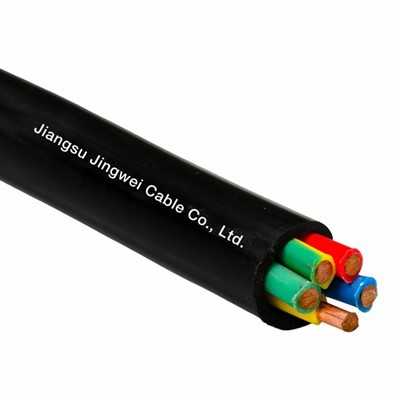
First, let’s define terms clearly because there’s a lot of confusion between breaking load, working load limit, and tensile strength. Breaking load (sometimes called ultimate tensile load, or UTL) is the maximum amount of force a control cable can withstand before it snaps. This isn’t a random number pulled out of a thin air; it’s determined in a lab by pulling a sample of cable at a constant rate until it breaks, measuring exactly how much force is applied at failure. For most control cables, that sample length is at least 10 inches long, because shorter lengths can yield artificially higher breaking loads (kinks, tight twists, and minor manufacturing flaws hide less in shorter samples).
But here’s the part most people miss: breaking load doesn’t exist in a vacuum. The type of control cable you use changes everything. Let’s go over the most common control cable configurations and their typical breaking load ranges, because a cable for a garden gate isn’t the same as one for a crane’s load line.
For start, there’s the standard smooth-control cable, used for automotive throttle links, RV brake systems, and small industrial actuators. These are usually made of 7×7 strand construction: seven smaller wires twisted together, then seven of those bundles twisted around a core. A 7×7 cable with a 1/8-inch diameter, made of galvanized steel for corrosion resistance, has a typical breaking load of around 1,200 pounds. A slightly thicker 3/16-inch 7×7 galvanized cable jumps to about 2,300 pounds. Now, compare that to a 7×19 cable—another common smooth-control type, with a more flexible construction, used for applications where the cable bends around pulleys frequently, like aircraft control surfaces or heavy equipment throttle controls. The same 1/8-inch diameter 7×19 galvanized cable has a breaking load of around 1,500 pounds—15% higher than the 7×7—because more strands mean more material to distribute force, and the tighter twist reduces individual wire stress points.
Then there’s the braided control cable, often used for heavy-duty applications like construction equipment lifting hooks, marine rigging, and elevator counterweights. Braided cables have an outer layer of interwoven steel (or sometimes stainless steel, for saltwater environments) that gives them extra abrasion resistance while keeping high tensile strength. A 1/4-inch diameter galvanized steel braided control cable, for example, has a breaking load of around 4,800 pounds—nearly double the strength of a 7×7 smooth cable of the same diameter. That extra strength comes at a small tradeoff in flexibility, but for applications where the cable rubs against metal parts all day, that’s a worthwhile trade.
Now, you might be thinking: “Great, so a 1/4-inch braided cable breaks at 4,800 pounds—so I can just run 4,000 pounds of force through it and call it a day.” Wrong. That’s where working load limit (WLL) comes in, and this is where a lot of customers come to me confused after a failure. The working load limit is the amount of force you can safely apply to the cable over its entire lifespan, accounting for factors that reduce strength: fatigue from repeated bending, corrosion, abrasion, temperature extremes, and even minor manufacturing defects. For control cables, the standard safety factor is 5:1. That means if a cable has a breaking load of 5,000 pounds, the maximum force you should apply to it long-term is 1,000 pounds. Some critical applications—like medical equipment or aircraft controls—use a higher safety factor, often 8:1, just to be extra cautious.
Wait, let’s make that concrete with an example. Last year, I worked with a manufacturing plant that was using 1/8-inch 7×7 galvanized control cables to operate door latches on a heavy stamping press. The plant’s maintenance team was pulling 1,100 pounds of force to engage the latches, and the cables were snapping every 2-3 weeks. When I did a test pull on a sample of their original cable, its breaking load was only 1,050 pounds—so they were already running at 105% of the breaking load, with no safety buffer. That’s a recipe for disaster: one day, a snapped cable wouldn’t just mean downtime—it could let the stamping press door open while the press was in operation, causing serious injury. We swapped them for 3/16-inch 7×19 cables, which have a breaking load of 2,300 pounds at a 5:1 safety factor, so their working load limit is 460 pounds. That’s still more than enough for their latch mechanism, and the cables have run flawlessly for over a year now.
Another common mistake I see customers make is not accounting for environmental factors that drop breaking load. If a control cable is used outdoors in salt air, or in a chemical plant with acid fumes, galvanized steel will corrode over time. Even a thin layer of rust can reduce a cable’s breaking load by 10-20%—I’ve seen cases where a cable that tested at 1,800 pounds new dropped to 1,400 pounds after two years in a coastal factory. For these environments, we offer stainless steel control cables, which have a breaking load almost identical to galvanized steel of the same size in new condition, and retain 95% of their strength even after 5 years of salt exposure. Temperature also matters: at temperatures above 500°F, steel cables lose about 30% of their tensile strength, so for high-heat applications like furnace door controls, we offer nickel-alloy control cables that maintain their strength in extreme heat.
So how do you calculate the right breaking load for your application? It’s not just looking at a number on a spec sheet—you need to do a little math and ask the right questions. First, figure out the maximum force your control system will ever apply to the cable. That includes not just the static force (like pulling a latch tight), but also dynamic forces: if the cable is snapped quickly, or absorbs a shock (like a heavy load dropping onto the cable), you have to add a shock load factor. Most engineers use a shock factor of 1.5 for dynamic applications, meaning if your static force is 1,000 pounds, your total required breaking load is 1,500 pounds. Then, apply your safety factor—usually 5:1, so 1,500 x 5 = 7,500 pounds. That means you need a control cable with a breaking load of at least 7,500 pounds for your application.
Wait, but let’s test that logic with a real example. A local crane operator came to me last quarter needing control cables for the hoist mechanism on a 50-ton mobile crane. Their old cables kept stretching and snapping when they lifted heavy loads. When we calculated their force: the maximum load they lift is 50 tons, which is 100,000 pounds, minus the weight of the hook and rigging (about 5,000 pounds), so static force is 95,000 pounds. Add a shock factor of 1.5 for sudden lifts, that’s 142,500 pounds of dynamic force. Apply a 5:1 safety factor for lifting equipment, that’s 712,500 pounds required breaking load. We supplied them with 1-inch diameter 6×37 IWRC (independent wire rope core) braided control cables, which have a breaking load of over 750,000 pounds each. The old cables were thin 1/2-inch smooth cables with a breaking load of only 50,000 pounds—they were working them at over 10 times the safe limit, which is why they were failing so often. Now, their uptime on hoist maintenance has dropped by 80%, and they haven’t had a single cable failure in 9 months.
Of course, there are edge cases that don’t fit these general rules. For example, control cables used in medical devices, like surgical robots or diagnostic equipment, need to be small and flexible, so we use high-tensile stainless steel that has a much higher strength-to-weight ratio than standard steel. A tiny 1/16-inch stainless steel control cable for a surgical robot has a breaking load of around 180 pounds, which is more than enough for its small actuators, and the extra flexibility makes it safe for use inside the human body. For aerospace applications, we also account for vibration, which can cause metal fatigue over time—even a cable with a high breaking load will snap after millions of small, repeated pulls if it’s not rated for vibration resistance, so we test all our aerospace control cables to 10 million load cycles before they leave our facility.
As a control cable supplier, one of my biggest frustrations is when cut-rate suppliers sell cables with exaggerated breaking load numbers. I’ve had customers come to me with a spec sheet that says a 1/8-inch cable has a breaking load of 1,800 pounds, only to send us a sample that tests at 1,200 pounds. That’s not just false advertising—it’s dangerous. A breaking load number is only useful if it’s tested to industry standards: ASTM A1023 for steel control cables, or ISO 9001 for quality-managed cable production. All our control cables are third-party tested, so you can trust that the breaking load number on our spec sheet is exactly what you’ll get when you install it.
Another thing to consider when choosing a control cable is how the cable is routed and terminated. A cable’s breaking load can be reduced by as much as 25% if it’s routed around a pulley with a diameter smaller than 10 times the cable’s diameter, or if it’s terminated incorrectly (using crimps that are too small, or knots that weaken the strand). I always tell customers to check their pulley size: a 1/8-inch cable needs a pulley at least 1.25 inches in diameter, and a 1/4-inch cable needs a 2.5-inch pulley. Termination is just as important—we offer free termination guides to all our customers, so you can crimp, swage, or splice the cable correctly to maintain its full breaking load.
So, to wrap this up: the breaking load of a control cable is not a one-size-fits-all number. It’s a calculated, tested value that depends on the cable’s material, construction, diameter, and environmental conditions. Too many people ignore this and end up with cables that fail prematurely, causing downtime, safety risks, or even accidents. Whether you’re equipping a small agricultural tractor, a large construction crane, or a medical robot, getting the right breaking load is non-negotiable.
If you’re not sure what control cable you need, or you want to test your current cables to make sure they’re up to the task, our team of engineers is here to help. We can walk you through calculating your required breaking load, recommend the right cable for your application, and even arrange for free sample testing for critical projects. Don’t risk your equipment, your team, or your uptime on guesswork—reach out to our team to discuss your control cable needs today.
Solar DC Cables References:
ASTM A1023-21, Standard Specification for Steel Strand, Uncoated Seven-Wire for Prestressing Applications
ISO 9001:2015, Quality Management Systems — Requirements
ASME B30.5-2023, Mobile and Locomotive Cranes
Control Cable Testing and Evaluation Guidelines, Industrial Cable Association, 2022
Corrosion Resistance of Steel Control Cables in Marine Environments, Journal of Materials Engineering and Performance, Vol. 31, No. 12, 2022
Jiangsu Jingwei Cable Co., Ltd.
As one of the leading control cable manufacturers in China, we warmly welcome you to buy bulk durable control cable made in China here from our factory. All cables are with high quality and competitive price. For pricelist and free sample, contact us now.
Address: Industrial Concentration Zone C, Guanlin Town,Yixing City, Jiangsu Province
E-mail: marilyn.wang@jingwei-cable.com
WebSite: https://www.jwcable.com/
