Hey there, let’s cut through the jargon for a sec—if you’re reading this, chances are you’ve watched a tiny iPhone screen get snapped into its frame, or a circuit board get all its resistors soldered on, and wondered: how the hell does that actually happen, without a million human hands fumbling everything? As an assembly equipment supplier, I get asked this every week from small-batch manufacturers just getting started and big ops looking to ramp up. Let me break it down like I’d chat with a buddy over coffee. Assembly Equipment
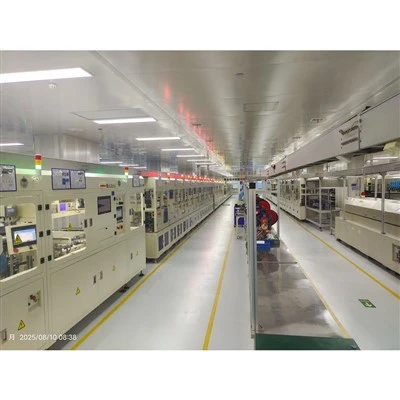
First off, assembly equipment isn’t some magic black box. It’s just a bunch of standardized, choreographed steps that used to be done by people, sped up, tweaked, and automated to avoid mistakes. The core goal here? Put the right parts in the right spot, at the right time, every single time—no tired hands, no missed screws, no one skipping a step to hit a deadline. Let’s start with the basics: what’s a part, anyway? For most consumer goods (think phones, blenders, fitness trackers) parts are super small—microchips, screws, rubber gaskets, all tiny enough that even a steady hand can slip up. That’s where the first big piece of assembly gear comes in: feeding systems.
Feeders are the unsung heroes here. I see guys walk into our shop and go, “Can’t we just dump all the screws in a pile?” Nope—those little parts are messy. A feeder is basically a vibratory tray, a linear track, or a small robot gripper that lines parts up one by one. For example, a vibratory feeder for tiny plastic rivits buzzes at a specific frequency, spinning the tray until every rivit is oriented the same way—flat head up, stem facing out—so the next step can grab it without fumbling. We’ve got custom feeders too, for weirdly shaped parts that don’t play nice with standard trays—like a curved medical device clip that only feeds right side up. These aren’t one-size-fits-all; we tweak them for whatever a client’s parts are, because if the feeder messes up, the whole line stops.
Next up: pick-and-place units. That’s the part everyone’s heard of, right? These are robot arms (or high-speed gantries) with tiny suction cups, magnets, or grippers that take a part from the feeder and set it exactly where it needs to go. The best ones move fast—we’re talking 100 picks per second for consumer electronics parts—and their accuracy is insane, within 0.02 millimeters. Like, that’s smaller than a grain of salt. How do they know where to go? Simple: a digital blueprint. Before the line runs, a technician loads a CAD file of the product into the equipment’s software, which tells the pick-and-place arm exactly the X, Y, Z coordinates for every part. If a part’s a resistor at position 12 on a circuit board, the arm knows to grab that resistor and drop it dead center there. No guesswork.
Wait, but what about parts that need to stick together, not just sit? That’s where joining and fastening steps come in. We’ve got a few main types here, depending on the part. For screws, there’s auto-screw drivers—they pick up a screw from a feeder, dip it in a tiny dollop of lock tight (to keep it from coming loose later), and drive it to a specific torque, so it’s not too tight (which strips the thread) or too loose (which falls out). For circuit boards, it’s wave soldering or reflow soldering. Wave soldering is when the whole board is dragged over a pool of molten solder, so all the bottom-side parts get soldered at once—super fast for high-volume runs. Reflow soldering is more precise for top-side parts: you lay a tiny bit of solder paste (like a sticky metal glue) on the board where the part goes, then blast the whole thing with heat (via infrared lamps or hot air) that melts the paste just enough to bond the part to the board. No messy drips, no cold solder joints that break later.
But here’s the thing: even the best equipment can mess up. A part might be missing, or a feeder might jam, or a board might have a tiny warp that makes a part sit wrong. That’s why inspection is non-negotiable. Vision systems are the eyes of the operation—tiny cameras hooked up to machine learning software that snap a pic of every part after it’s placed. They check if a resistor is the right type (say, a 1k ohm not a 10k), if it’s straight (not tilted 10 degrees), if the solder joint is solid, even if a tiny dust speck got on the part. If something’s off, the line doesn’t just keep going—it stops, or kicks the bad part out onto a reject conveyor, so it doesn’t make it to the next step. We set these inspection thresholds with clients, too—some want 100% inspection for medical devices, others are okay with 2% for low-risk parts. It’s all about balancing speed and quality, which is what most of our clients struggle with.
Then there’s the finishing steps. For things like blenders, that might be pressing the motor into the housing and testing if it turns on. For phones, it’s applying adhesive to the screen, pressing it down with consistent pressure (no bubbles!) and curing it with UV light. These steps are less “moving parts” and more “precision control”—we set the equipment to apply 5 pounds of pressure for exactly 2 seconds, or cure the adhesive at 365 nanometers for 10 seconds, every single time. No human can hold pressure that consistent for 10,000 units straight—they’d get tired, mess up. That’s the whole point of automation, after all: repeatability.
Wait, let’s not forget the big picture: assembly lines aren’t just a bunch of machines strung together. They’re integrated, with a control system that ties everything together. That’s a programmable logic controller (PLC), basically a tiny computer that runs the whole show. It talks to the feeder, the pick-and-place arm, the inspection camera, the screwdriver—makes sure the order goes: feed part → pick part → place part → inspect → next step. If one machine slows down, the PLC adjusts the rest of the line so no bottlenecks form. For example, if the pick-and-place arm gets held up for a second, the feeder pauses so it doesn’t dump a bunch of parts that no one’s grabbing. It’s like a conductor for an orchestra, only way more precise.
I know what you’re thinking: this sounds complicated. And it is, but not because the machines are fancy (though some are, we’ve got a new pick-and-place that runs on linear motors instead of belts, so it’s faster and less likely to jam). It’s complicated because every product is different. A medical device’s assembly line isn’t the same as a toaster’s, which isn’t the same as a electric bike’s. That’s why when a client comes to us, we don’t just sell them a machine and send them on their way. We do a site visit, see their current process, look at their parts, design a system that fits their needs, install it, and train their team. Last year, we worked with a small startup making wearable fitness trackers—they were doing everything by hand, could only make 50 units a day, and were missing deadlines for their first big retail order. We built a custom line: vibratory feeders for the wristband clasp, pick-and-place for the chip, reflow soldering, vision inspection. Now they make 800 units a day, and no more missed screws that got sent out to customers. That’s the good stuff, right?
A lot of people I talk to think assembly equipment is only for big factories with 100,000 units a month. Nope—we work with everyone: small shops making custom industrial parts, startups rolling out their first product, mid-sized companies looking to cut labor costs. The key is matching the equipment to your volume and your parts. If you’re making 1,000 units a month, you don’t need a $500k high-speed line—we’ve got smaller, modular systems that you can add to later when your volume picks up. No need to blow your whole budget upfront.
I should also call out a common myth: automation takes jobs. Look, when we installed that line for the fitness tracker startup, they didn’t lay anyone off. Their old team was doing repetitive, boring work—feeding parts, checking for mistakes, tightening screws. Now those people are running the line, troubleshooting small issues, working on things that actually matter. That’s the shift, right? Automation doesn’t replace workers—it replaces the tedious, error-prone tasks that no one wants to do, and lets your team focus on what makes your product unique.
If you’re reading this, and you’re dealing with slow assembly lines, high error rates, or scaling up and not sure what to do next—hit us up. We don’t do one-size-fits-all garbage. We’ll walk through what you need, show you how the equipment works for your specific parts, no sales pitch pressure, just real talk about how to make your process smoother, faster, and less stressful. No more guessing, no more wasted parts, no more staying up till 2AM fixing a line that won’t run.
Wait, let me make sure I didn’t leave anything out. What about when things go wrong? Like, a feeder jams mid-run. The control system sends an alert to your team’s phone, tells them exactly which feeder and what part, so they can fix it in 30 seconds instead of 10 minutes of hunting. Most of our equipment has built-in diagnostics, so you don’t need a team of engineers on staff to keep it running. We also offer 24/7 support, so if something breaks at 2AM when your line is running a big order, you can call us and we’ll walk you through fixing it, or send a tech if needed.
Another thing: sustainability. A lot of clients don’t talk about this, but automated lines cut down on wasted parts. If a human drops a screw or places a part wrong, that’s a whole part or even a board you have to throw away. Our lines have error rates under 0.1%, so way less waste. That’s not just good for your bottom line, it’s good for your carbon footprint—less material going to the landfill.

At the end of the day, assembly equipment is just a tool to make your life easier. It’s not there to replace you, it’s there to handle the stuff you’re bad at (being perfect 100% of the time, moving fast without mistakes) so you can focus on the big picture: making a product people love. If you’re ready to stop struggling with assembly bottlenecks, let’s chat. We can talk through your needs, no fluff, just what will actually work for you.
Ball Screw Linear Modules References
- Groover, M.P. Automation, Production Systems, and Computer-Integrated Manufacturing. Pearson, 2019.
- Vujosevic, R. "High-Speed Pick-and-Place Robots for Electronics Assembly." Industrial Robot: An International Journal, vol. 42, no. 3, 2015, pp. 224-231.
- American National Standards Institute (ANSI). "Safety Standards for Industrial Assembly Equipment," ANSI B11.20-2018, 2018.
Yangning (Xiamen) Intelligent Technology Co., Ltd.
With abundant experience, we are one of the most professional assembly equipment manufacturers in China. As we have world-leading production equipment and strong manufacturing capabilities, we warmly welcome you to buy bulk advanced assembly equipment from our factory. Customized orders are welcome.
Address: Room 307-2, No. 15 Duiying Road, Software Park Phase III, Torch Hi-Tech Zone, Xiamen, Fujian, China
E-mail: mia@ynautos.com
WebSite: https://www.ynautos.com/
