If you’ve ever run your hand over the smooth, consistent interior door panel of a modern sedan, or trusted the tiny, perfectly shaped plastic clip that holds a car’s dashboard wiring harness in place, you’re interacting with a high-precision automotive plastic injection-moulded part. For our team here at [Our Company Name]—a dedicated automotive plastic injection moulding supplier—we spend every day chasing that exact level of consistency, and we’re here to tell you it’s not just about melting plastic and squeezing it into a mould. Every part of the process, from design to final inspection, comes with unique, non-negotiable challenges that can make or break a component that’s meant to work for 10+ years, through extreme temperatures, vibration, and constant use. Let’s break down the biggest hurdles we face, and the work we do to overcome them, because if you’re a component buyer or engineer, understanding these challenges is what helps you pick a moulding partner that delivers parts you can actually depend on. Automotive Plastic Injection Moulding
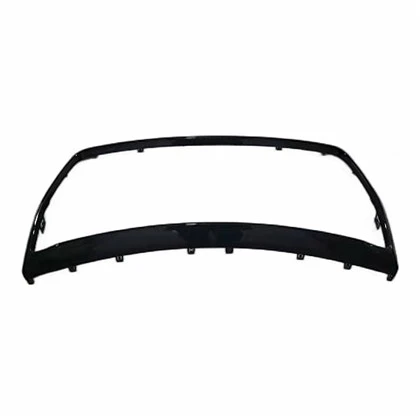
First, there’s the non-negotiable material complexity that’s baked into every automotive plastic part. This isn’t the generic toy plastic you mould at home; automotive parts are built for specific, harsh environments, so they use specialized materials—think glass-filled polyamide (nylon) for under-hood parts that need heat resistance, thermoplastic olefins (TPO) for bumpers that need to flex without cracking, or polycarbonate-acrylonitrile butadiene styrene (PC-ABS) for interior trim that needs UV resistance. The problem here is that each of these materials behaves differently when melted, cooled, and shaped, and even tiny inconsistencies in material formulation or processing can derail precision. For example, glass-filled nylon has a tendency to warp as it cools because the glass fibers align in specific directions during injection. If we don’t account for that fiber alignment during mould design, a 100mm door handle that’s supposed to be perfectly straight might end up 0.8mm off-center—enough to cause a squeak when the door opens, or to not fit properly with the adjacent interior trim. Even something as small as the moisture content in a resin pellet can be a disaster: hygroscopic materials like nylon absorb moisture from the air, and if we don’t dry them to the exact required level (usually 0.05% or less), steam bubbles form in the molten plastic. Those bubbles don’t just weaken the part; they create tiny surface defects called sink marks that are impossible to hide, and they can alter the part’s dimensional stability. Last year, we had a client send us a batch of under-hood fuse box housings that failed on their first production run because their resin supplier shipped a pallet of nylon pellets with 0.2% moisture content. We caught it early thanks to our in-line moisture testing, but it took us three days to re-dry the pellets and adjust our injection parameters, costing the client a critical 48-hour window to meet their production schedule. That’s the kind of material-related challenge that separates a good supplier from a reliable one—we don’t just get the material, we test every lot before it hits the mould.
Next up, there’s mould tooling precision that’s far more demanding than most other industries. When you’re moulding a part for aerospace or medical devices, precision is measured in thousandths of an inch, but automotive parts have an extra layer of demand: they have to be interchangeable across thousands of vehicles, and they have to assemble perfectly with dozens of other parts. A dashboard air vent, for example, has 12 separate features that need to line up with adjacent trim pieces, and a mould can’t deviate more than 0.025mm across any of those features. The tools we use for this are made from high-grade P20 or H13 tool steel, machined on 5-axis CNC mills that cost $2 million or more, and even then, small errors in machining can lead to big problems. The biggest issue with mould tooling is wear and thermal expansion. When a mould is heated to 200–300°C (to melt the plastic) and then cooled rapidly to solidify it, the tool expands and contracts by fractions of a millimeter every cycle. Over time, repeated thermal cycling causes tool steel to wear, especially in high-wear areas like gates (where plastic enters the mould) or ejection pins that push the finished part out. If we don’t monitor tool wear and re-polish or re-machine the mould on a strict schedule, a part that was accurate on the first shot will start to develop dimensional inconsistencies after 50,000 cycles. We learned this the hard way a few years ago with a client’s fuel tank vent valve, a small part that requires a 0.01mm tolerance on its seal surface. We ran 100,000 cycles without a full tool inspection, and by the 75,000th part, the seal surface had worn enough to cause a fuel leak in field tests. That mistake cost us a re-tool and a $10,000 rework for the client’s failed parts, and now we have a monthly tool maintenance schedule that includes coordinate measuring machine (CMM) scans of every critical feature on every mould. We also use modular tooling for high-volume parts, so we can replace worn inserts quickly without shutting down the entire line for days.
Then there’s the production process itself, where even small variations in machine settings can throw off an entire batch of parts. Injection moulding is a cyclical process: fill the mould with molten plastic at a specific pressure, hold that pressure to pack the mould as it cools, cool it at a controlled rate, then eject the part. For high-precision automotive parts, every one of those steps has to be held within a hair’s breadth of its target. For example, hold pressure is critical: if you apply too little pressure when the plastic starts to cool, the part will shrink unevenly, causing sink marks or warpage. Apply too much pressure, and the mould can deform, or the part will have excessive internal stress that can cause it to crack in cold weather. Under-hood parts, which experience temperature swings from -40°C to 120°C, are especially vulnerable to internal stress—we once had a client’s engine cover that cracked in testing because we had set the hold pressure 100 PSI too high; the internal stress built up in the part, and a week of testing at -20°C was enough to split it down the middle. What makes this even harder is that no two materials or moulds are the same. A TPO bumper mould requires a different pressure and cooling rate than a glass-filled nylon bracket, and even slight changes in room temperature or humidity can throw off settings. That’s why we use closed-loop process control systems that monitor every parameter in real time—pressure, temperature, cycle time, injection speed—and adjust automatically if something drifts outside our tolerance range. We also run a “first article inspection” (FAI) for every new production run, where we measure 20+ critical features on the first 10 parts to make sure everything lines up before we let the machine run 24/7. This level of process control isn’t standard for all moulding shops, but automotive requires it—safety and performance depend on it.
Another huge challenge that’s often overlooked is part validation and quality assurance that goes far beyond surface-level checks. When a part is for a passenger car, it has to pass dozens of standardized tests: tensile strength, impact resistance, UV aging, thermal cycling, and corrosion resistance, to name just a few. Even if a part looks perfect off the line, if it fails a thermal cycling test, it’s useless. Last year, we had a client request a batch of interior door trim that looked flawless on CMM checks, but when we tested them for 1,000 cycles of heating to 85°C and cooling to -30°C, 10% of the parts developed tiny cracks in the corners. The problem? We had used a standard TPO grade that worked for other interior parts, but this specific trim piece had a sharp corner that created stress concentrations, and the standard grade didn’t have enough impact modification to handle the cycling. We had to rework the mould’s corner radius and switch to a higher-impact TPO grade, which added two weeks to the production timeline, but it would have been far worse if the faulty parts had made it to the client’s assembly line. Quality assurance for automotive isn’t just checking dimensions—it’s testing how the part will perform in every possible condition it might face in its 10-year life. We have a full in-house testing lab that can run all these tests on-site, which means we catch issues long before parts leave our facility. We also do batch-level testing, not just random samples, so we can track performance across every run and catch trends before they become problems.
Finally, there’s supply chain complexity that adds another layer of difficulty to producing high-precision automotive parts. Automotive manufacturing is built on just-in-time (JIT) delivery, meaning a car plant might need a shipment of 10,000 door handles the very next day, with zero tolerance for delay. That means our moulding process has to be 100% reliable, with no downtime, and all the materials and components we use have to be consistent every time. For example, we source most of our tool steel from two certified suppliers that have strict quality standards, but even so, we have to test every batch of steel for hardness before we use it—if the steel is too soft, it wears out too quickly; too hard, it’s brittle and can crack during machining. We also work with multiple resin suppliers to avoid single points of failure, but we have to qualify every new resin lot against our strict performance criteria before we use it. Last year, one of our resin suppliers had a plant shutdown due to a fire, and we had to switch to a backup supplier for a batch of brake reservoir caps. We tested every single cap for pressure resistance, and they passed, but it took us 48 hours to adjust our injection parameters to match the new resin’s viscosity, which meant we had to adjust our production schedule to meet the client’s JIT requirement. For automotive moulding suppliers, the supply chain isn’t just about getting parts—it’s about building a network that can adapt to disruptions without sacrificing quality or delivery.

At the end of the day, the challenges of producing high-precision automotive plastic injection-moulded parts are all about balancing consistency, performance, and reliability. Every part we make has to work seamlessly with the rest of a vehicle, last for years, and meet strict safety standards, and that means we can’t cut corners on material science, tooling precision, process control, or quality testing. For automotive engineers and buyers, choosing the right moulding partner is about finding a team that understands these challenges, has the systems and experience to overcome them, and is transparent about the work that goes into every part. If you’re looking for a supplier that can deliver high-precision automotive plastic parts on time, with the consistency your line depends on, reach out to us to discuss your project. We’re here to turn your design specifications into parts that perform, for the long haul.
Seat Systems References:
Plastics for Automotive Engineering, Society of Plastics Engineers, 2021
Injection Molding for High-Precision Applications, International Organization for Standardization (ISO), 2022
Automotive Component Durability Testing Guidelines, SAE International, 2020
Hebei Xiujie Auto Parts Co., Ltd.
As one of the most professional automotive plastic injection moulding manufacturers and suppliers in China, we have world-leading production equipment and strong manufacturing capabilities. Please feel free to wholesale bulk customized automotive plastic injection moulding from our factory. Contact us for quotation and free sample.
Address: Industrial New Area, Wen’an County, Langfang City, Hebei Province (State-run Xiaowu Farm)
E-mail: runtaoli87@gmail.com
WebSite: https://www.xiujie-cn.com/
