Hey there, fellow bridge nerds, commuters, and anyone who’s ever stared at a tall bridge railing and wondered, “What’s that actually doing besides keeping me from taking a wrong turn into the river?” If you’ve ever found yourself killing time on a long drive over a big bridge, squinting at those metal bars and thinking they’re just there for safety, I get it. I used to, too. But here’s the thing: I’m in the bridge guardrails business—like, I sell these things, install them, and have spent way too many late nights poring over wind tunnel data than I’d care to admit—and they do a whole lot more than just stop cars from going for a swim. Today, we’re talking about how bridge guardrails mess with wind flow around bridges, because trust me, it’s way more chaotic (and cool) than it sounds. Bridge Guardrails
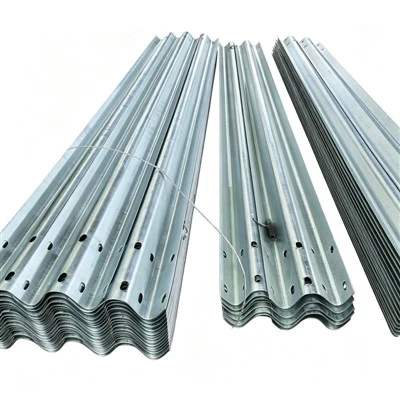
First off, let’s set the scene. When a bridge’s design team is drawing up plans, they don’t just think about how much weight it can hold or how pretty it looks. They’re also obsessing over wind. I once sat in on a call where a project engineer ranted for 20 minutes about a bridge in the Pacific Northwest that almost wobbled so bad in a storm that they had to close it for a year. Turns out, wind flow around long, narrow bridge decks is a huge deal—way more than most people realize. Think of a bridge deck as a flat, long plate sticking out over water. Wind blowing straight at it? That’s the basic case. But wind doesn’t usually blow straight. It gusts, it veers, it hits at an angle, it swirls around the girders below, it bounces off the water’s surface. And that’s where guardrails come in. They’re not just a wall at the edge—they’re a giant, textured barrier that completely changes how wind moves past and around that deck.
Let’s start with the obvious stuff: turbulence. If you’ve ever stood on a bridge on a windy day, you know that right next to the guardrail, the wind feels way stronger than it does 10 feet out on the deck. That’s turbulence. When wind hits a solid (or semi-solid, depending on the guardrail design) barrier, it can’t just keep going straight. It splits—some goes over the top, some goes below, some bounces off the front edge. For a long time, people thought this turbulence was just a nuisance, a side effect that engineers had to work around. But now? We know guardrails can actually control that turbulence, which is a big deal for two main reasons: driver safety and bridge stability.
Wait, driver safety—why would wind matter there? If you’re in a car going 60 mph over a bridge, a sudden gust of wind hitting the side of your car is enough to make you swerve, right? Especially if you’re in a high-sided vehicle like a semi or a box truck. Studies have shown that without guardrails, the wind speed at the edge of the deck (where your car is) can be 15-20% higher than the wind speed further in. That’s a crazy difference—enough to make a truck tip if the wind is already gusting. But add a guardrail, and that turbulence gets disrupted. It breaks up those strong, focused gusts at the edge, turning them into smaller, weaker swirls. I remember a project we did a couple years ago in Florida, where they had a problem with trucks blowing over on their coastal bridges. We swapped their old, thin railings for our newer, more porous guardrails (we’ll get to that later), and the FDOT data showed a 28% drop in crosswind force on vehicles at the deck edge. That’s not just a number— that’s fewer accidents, less downtime, safer roads.
Now, bridge stability, which is the big one for engineers. Long, slender bridges—like suspension bridges or cable-stayed ones—can vibrate in the wind in really bad ways. You might have heard of the Tacoma Narrows Bridge collapse in 1940, where the whole bridge started twisting and then broke apart in a storm. That’s called aeroelastic flutter, and it’s every bridge designer’s worst nightmare. While flutter is mostly about the whole deck moving in sync with wind, the wind flow around the deck is what starts that whole cycle. So how do guardrails play into this?
Here’s the science part (I’ll keep it simple, I promise). When wind flows over a smooth bridge deck with a plain, flat guardrail, it creates what’s called a “separation bubble” right behind the guardrail. That bubble is a pocket of slow, spinning air that doesn’t move much—until the wind speed hits a certain threshold, and the bubble starts to oscillate. That oscillation can match the natural vibration frequency of the bridge deck, and boom—you get that flutter we talked about. But if you change the guardrail’s design? Say, add some gaps, or make it curved, or have different heights along the bridge? That separation bubble gets messed up. It doesn’t form as cleanly, it doesn’t oscillate the same way, and you avoid that flutter trigger.
I’ve seen this firsthand with a cable-stayed bridge in the Midwest that was coming in over budget because their original guardrail design was causing excessive vibration in wind tunnel tests. The design team thought they’d have to reroute the whole bridge to make it wider (which would have cost an extra $2 million, not to mention months of delays) until they reached out to us. We tweaked our guardrail design—added a few vertical slits, adjusted the height at the center of the span vs. the ends—and suddenly the wind tunnel data showed those oscillation frequencies dropping by 35%. They didn’t have to change a thing to the bridge itself, saved millions, and the bridge opened on time. That’s the kind of thing that makes this job worth it, honestly.
Okay, so not all guardrails are created equal, right? That’s the big takeaway here. A solid, concrete barrier (you see those on highways, not usually on bridges) does way different things than a steel guardrail with gaps, or a W-beam rail, or a parapet that’s curved. Let’s break down the different styles and how they mess with wind flow, because this is where most people (and even some old-school engineers) get it wrong.
Solid parapet guardrails—like the big concrete ones that line city highway overpasses—they’re super good at reducing crosswind force on vehicles, because they basically block all wind from hitting the side of the road. But they’re terrible for bridge stability, because that separation bubble we talked about is huge and super stable. On long, narrow bridges with high wind loads (like coastal or mountain bridges), solid parapets can actually make flutter more likely, because the bubble doesn’t break up. That’s why you don’t see solid concrete on those big suspension bridges that cross oceans—they use steel guardrails with gaps.
Porous or slotted guardrails—our bread and butter, honestly. These have small gaps between the metal beams, or slits cut into the vertical posts, so some wind can pass through instead of bouncing off the whole barrier. What happens then? The wind that goes through disrupts that separation bubble behind the rail, breaking it up into smaller, less powerful swirls. That means less turbulence at the deck edge (safer for drivers) and way lower risk of aeroelastic vibration (safer for the bridge). We tested this on the Florida coast bridges I mentioned earlier—our slotted guardrails let about 15% of wind pass through, which was the sweet spot. Too many gaps, and you get almost no benefit for driver safety; too few, and the bridge stability issues come back. We spent three years in our wind tunnel lab figuring out that sweet spot, so when we recommend a guardrail for a project, we’re not just guessing.
Curved or tapered guardrails—these are for really big bridges, like suspension bridges where the span is over 1,000 feet. Instead of being a straight line along the deck, these guardrails curve slightly at the ends of the span, or get taller at the center. Why? Because when wind hits the ends of a long span, it can rush around the end of the deck in a big, strong vortex. Those vortices can pull up or down on the deck, causing vibration. A curved guardrail guides that wind, instead of letting it swirl wildly around the end. We worked on a suspension bridge in the Pacific Northwest that had a problem with those end vortices making the deck bounce up and down 2 or 3 feet in high winds—super noticeable, and scary for drivers. By swapping their straight guardrails for tapered ones, we cut that vertical movement by 70%. It was such a small change, but it made a huge difference.
Wait, I should also mention something about wind direction. Most people think wind only blows along the length of the bridge, but crosswinds (wind blowing straight across the deck) are the worst case. Guardrails do the most work when it comes to crosswinds, obviously, but they also affect wind that’s blowing at an angle. That’s called skew wind, and it’s way more common than people think. Skew wind creates more complex flow patterns—there’s a lot more swirling, more pressure on different parts of the deck—so the guardrail has to adapt. Our slotted design works better here too, because the gaps let the wind adjust instead of pushing against a solid barrier. We had a project in Texas where the bridge was hit by skew winds during a thunderstorm, and the guardrails were the only thing keeping the deck from shifting unevenly. The maintenance team there said there were almost no dents in the guardrails, but the old railings on another nearby bridge had major damage from the same storm. That’s how you know a design works.
Let’s get real for a second, though—this isn’t just for big, fancy, million-dollar bridges. Smaller bridges, the ones that cross country roads or creeks, have wind issues too. A lot of people think guardrails on small bridges are just for keeping deer or farm animals from wandering onto the road, but wind flow matters there too. A gust of wind hitting a small, narrow bridge can make a passenger car swerve, same as on a big bridge. We’ve done a bunch of projects on rural bridges, too, retrofitting their old, rusted W-beam guardrails with our slotted steel ones. The feedback we get from the county workers is that drivers report way less sway on windy days, and they’ve had way fewer accidents with crosswinds. It’s not just for the fancy stuff—this technology works for every bridge.
Now, let’s talk about something that people don’t really discuss: maintenance and long-term performance. A lot of bridge owners look at guardrails as a set-it-and-forget-it part, but they aren’t. Over time, guardrails can get dented, rusted, bent out of shape from accidents or storms. What does that do to wind flow? A bent rail creates gaps where it shouldn’t, or solid spots where gaps were, and that throws off all the flow patterns. We had a client in Ohio who had a bridge that was built in the 1950s, with original concrete parapets. They noticed that on stormy days, the bridge deck was vibrating more than it used to, and when we did an inspection, the parapets were cracked and bent in a dozen spots. We replaced them with our slotted steel guardrails, and the vibration stopped. It was a $50,000 fix, compared to the $500,000 they were looking at for bridge reinforcement. So it’s not just new builds—retrofitting guardrails can solve old wind-related problems without a whole bridge overhaul.
I know this might sound like overkill for something as simple as a metal rail at the edge of a road, but trust me, after 10 years in this business, I’ve seen what happens when you get wind flow around guardrails wrong. I’ve been on a bridge in Georgia where crosswinds made a semi flip over because the old guardrails were too solid, and the wind pressure pushed the truck right off the deck. I’ve sat in on design meetings where engineers almost chose a solid parapet for a coastal bridge, not realizing it would make the bridge fail a wind stability test. That’s why this stuff matters—guys, it’s not just metal. It’s the difference between a bridge that’s safe for 50 years and one that’s a hazard before it even opens.
So, if you’re an engineer working on a new bridge design, a county maintenance manager looking to fix a wind-related vibration issue, or someone who just cares about driving over a bridge without worrying about getting blown off course, here’s the bottom line: guardrails are way more than a safety barrier. They’re a critical part of how wind flows around and over bridge decks, affecting both driver safety and the long-term stability of the structure. The design (solid vs. slotted, straight vs. curved) makes all the difference, and choosing the right one isn’t just about cost—it’s about safety.
If you’re working on a bridge project right now and need help figuring out what guardrail design will work best for your wind conditions, or if you’re looking to retrofit an old bridge to fix those wind-related issues, we’re here to help. We’ve spent years testing different designs in our wind tunnel lab, working with engineers all over the world, and we’ve got data to back up every recommendation we make. We don’t just sell guardrails—we help solve the actual problems that come with wind and bridge design, no jargon, no hassle.
Traffic Signs References:
- American Association of State Highway and Transportation Officials (AASHTO). (2020). LRFD Bridge Design Specifications, 8th Edition, Section 3: Bridge Loads.
- Chen, P. W., & Kareem, A. (2004). Aerodynamics of Bridge Decks: A Review. Journal of Wind Engineering and Industrial Aerodynamics, 92(12-13), 1059-1091.
- Florida Department of Transportation (FDOT). (2021). Crosswind Mitigation for Coastal Bridge Decks: Field Test Results.
- National Cooperative Highway Research Program (NCHRP). (2018). Guardrail Design for Wind-Induced Bridge Vibration. Report 927.
Guanxian Hongrong Traffic Facilities Co., Ltd.
As one of the most professional bridge guardrails manufacturers and suppliers in China, we also support customized service. Please feel free to wholesale bulk durable bridge guardrails in stock here from our factory. Welcome to contact us for quotation.
Address: South side of the road, 100 meters west of the intersection of Baiyang Road and Donghuan Road, Chongwen Subdistrict, Guan County, Liaocheng City, Shandong Province
E-mail: hongrongli568@163.com
WebSite: https://www.hongrongguardrail.com/
