Hey folks, if you’ve ever been deep in the weeds of outfitting a warehouse with lighting, you’ve probably run into this weird little number called power factor. I get it—when I’m out on calls with warehouse managers or maintenance leads, half the time they ask me, “Wait, what is power factor again, and why does it even matter for my warehouse light bulbs?” Let’s break this down like we’re chatting over a breakroom cup of day-old coffee, no jargon, no stuffy textbook equations. Warehouse Light Bulbs
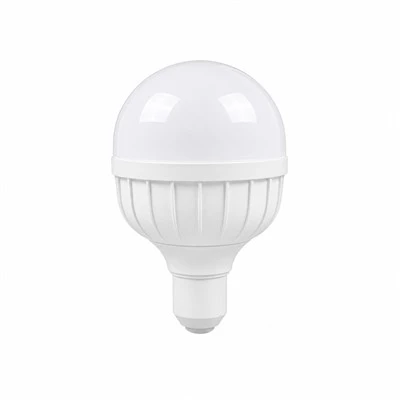
First off, let’s ground this in real life, not the lab. A warehouse isn’t your cozy home living room—we’re talking high ceilings, 24/7 (or 18-hour) operation, massive open spaces, and lighting that often runs on older, clunky tech. Most standard warehouse bulbs these days are LED, but you still see some old T8 fluorescents, high-pressure sodium (HPS) for big bay spaces, and even a few metal halides lingering in older facilities. Each of these has a totally different power factor, and that’s not just a random number—it affects your electric bill, your warehouse’s energy efficiency, and even how happy your team is working under those lights.
Let’s start with the super simplified power factor definition, no engineers required. Power factor (PF) is the ratio of how much actual “useful” power your lights use to do work (like illuminating a 10,000 sq ft packing zone) versus the total power drawn from the wall. Think of it like ordering food at the warehouse cafeteria: you pay for a whole combo meal (total power) but only the burger and fries (useful power) are what you actually eat— the soda you chug and the extra side of pickles you toss aside are the “wasted” power that doesn’t help you get full. A perfect PF is 1.0, meaning every watt drawn is going straight to lighting. A bad PF is like paying for a full meal and only eating half of it—you’re wasting cash.
Now, let’s talk about warehouse light bulbs specifically, because this is where it gets relevant to our world (I’m a warehouse light bulbs supplier, so this isn’t just theoretical to me). Let’s go through the most common bulb types you’ll find in warehouses today:
-
High-Pressure Sodium (HPS) Bulbs: These are the old workhorses that used to dominate high bay warehouses back in the day. If you’ve ever worked in a space with those orange-tinted lights, you know them. Their power factor is usually… well, not great. Most standard HPS bulbs have a PF around 0.5 to 0.6. Wait, that means they’re only using 50-60% of the power they draw for actual light? No wonder some old warehouses had sky-high energy bills. Why is that? HPS bulbs need a ballast to work, and old magnetic ballasts (the kind that’s just a big coil of wire) aren’t efficient. They create a lot of reactive power— that’s the wasted power that doesn’t do light work, it just sits there bouncing between the bulb and the wiring. A lot of suppliers would slap a “1000W HPS” on the box, but that’s total power, not useful light. You might be paying for 1000W but only getting 500W of usable light.
-
T8 Fluorescent Bulbs: A lot of warehouses switched to these after HPS because they’re brighter and better for color rendering. Their power factor is a bit better, but still hit or miss. Old uncorrected T8s (meaning no fix for the reactive power) have a PF around 0.5 to 0.7. If you upgrade to a power-corrected electronic ballast, that jumps up to 0.9 or even higher. I’ve seen warehouse managers who swapped out magnetic ballasts for electronic ones on their T8s cut their lighting energy bills by 15% almost overnight— that’s the power factor working for them. The bad news is a lot of cheap T8 kits out there cut corners on the ballast, so you might buy a “high efficiency” bulb and still get a low PF. That’s why I always tell clients to check the ballast spec, not just the bulb.
-
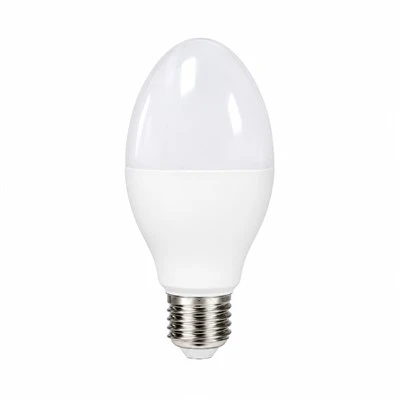
LED Warehouse Bulbs: This is where things get interesting, and it’s why LED has taken over the market so fast. Modern LED warehouse bulbs almost always have a high PF, usually 0.9 or higher— and a lot of the good ones (like the ones I stock) are 0.95 or 0.99, almost right at that perfect 1.0 mark. Why? LEDs use a driver instead of a ballast, and good drivers have built-in power factor correction (PFC) circuits. Those circuits fix the reactive power waste, so almost every watt drawn is going to light. Let me put that in numbers: a 100W LED high bay with a 0.95 PF is delivering ~95W of useful light, whereas a 1000W HPS with 0.5 PF is delivering just 500W of useful light. That’s a massive difference, and it’s why LED warehouses use way less energy. But wait— not all LEDs are equal. Cheap no-name LEDs from Amazon or random suppliers often cut corners on the PFC circuit to save a dime, so their PF can be as low as 0.5 or 0.6. I’ve had a client come to me last year saying their new LED bulbs were “no better” than the old HPS, and it turned out they bought the super cheap ones with low PF. We swapped them for my stock of high-PF LEDs, and their energy bill dropped $2,200 that first month. That’s not a marketing line— that’s real stuff I see every week.
Now, why should a warehouse manager or owner care about this, beyond just the fun of knowing a power number? Let’s get into the real-world impacts, because this isn’t just an electrical engineer’s playground.
First up: your electric bill. Most utility companies charge a penalty for low power factor if it falls below 0.9 (this is called a demand charge or power factor surcharge). Wait, really? Yeah, especially for commercial properties like warehouses that use a lot of power. If your warehouse has a total PF of 0.6 because of all your old HPS bulbs, your utility might tack on an extra 10-15% to your monthly bill just for that. Let’s do quick math on a 50,000 sq ft warehouse: average lighting use is 50,000 kWh a month. At $0.12 per kWh, that’s $6,000 a month. A 10% surcharge is $600 a month, $7,200 a year. That’s almost enough to buy a whole pallet of high-quality LED bulbs. Fixing that with high-PF bulbs eliminates that surcharge— it’s free money back in your pocket.
Second: warehouse wiring and equipment stress. Low PF means you’re drawing more total current to get the same amount of useful light. More current means more heat in your wiring, your circuit breakers, and your electrical panels. Over time, that extra heat can shorten the life of your wiring, cause tripped breakers, or even be a fire hazard. I had a client a few years ago who had flickering lights in a 100,000 sq ft warehouse, and their electrician found that their old low-PF HPS bulbs were drawing 30% more current than needed, overheating the main panel. Fixing the PF with LEDs let them upgrade their panel less often and avoid a potential outage during peak shipping season— that’s a big deal when you’re getting 1000 pallets a day.
Third: light quality and consistency. Wait, how does power factor tie into light quality? Well, bulbs with low PF (especially magnetic ballast ones) can flicker, even if you can’t see it with the naked eye. The human eye can pick up tiny flickers at high frequencies, and over a 12-hour shift, that causes eye strain, headaches, and lower productivity. I’ve had pickers tell me that switching from old HPS to high-PF LEDs made them less tired at the end of the day— they noticed less eye fatigue and could spot small product labels easier. That’s a real operational benefit, not just a financial one.
Now, let’s clear up a few common myths I hear all the time from warehouse teams:
Myth 1: “Power factor only matters for big warehouses, not small ones.” Nope, even a 10,000 sq ft mini-warehouse with 50 bulbs can get hit with a power factor surcharge if their PF is low. Utilities apply it based on your total facility PF, not just size.
Myth 2: “All LEDs have high power factor.” No way. I can’t tell you how many bad LEDs I’ve tested that had PF below 0.7. A lot of cheap suppliers skip PFC to cut production costs, so always ask for the PF spec before you buy, not just the lumens or wattage.
Myth 3: “I don’t need to worry about PF if I’m already on LED.” Again, no— only if your LEDs have good PFC. If you install low-PF LEDs, you might even have a worse PF than some corrected fluorescent setups. I’ve tested some super cheap LED floodlights that came in at 0.55 PF, same as old HPS.
So, as a warehouse light bulbs supplier, what do I recommend for folks looking to get the best out of their lighting in terms of power factor and overall value? Let’s keep this simple, actionable steps:
-
Audit your current bulbs first. If you’re still on HPS or old uncorrected T8s, you’re almost certainly leaving money on the table. Grab a quick power meter (or ask your electrician) to test your current PF— it’ll be eye-opening.
-
Upgrade to high-PF LEDs. Look for bulbs with a PF of 0.9 or higher— I only stock LEDs that are 0.95 or better, no exceptions. They’re not much more expensive upfront than the cheap ones, and the energy savings pay for themselves in 6-18 months, plus you eliminate those surcharges.
-
Don’t skip the ballast upgrade if you’re sticking with fluorescents. If you can’t go all LED right now, swap old magnetic ballasts for electronic ones with built-in PFC— that’ll bump your T8 PF up to 0.9 fast, for a fraction of the cost of new bulbs.
-
Ask questions before you buy. Don’t just take a supplier’s word that a bulb is “energy efficient.” Ask for the power factor, the lumens per watt, and the expected lifespan. Any reputable supplier (like me) will have those specs on hand, no hassle.
Wait, let’s circle back to that real story I had earlier. Last spring, a client who runs three regional warehouses hit me up because their electric bill had jumped $8,000 in six months. We did a walkthrough, tested their bulbs, and found 70% of their HPS high bays had a PF of 0.52, so their utility was hitting them with a 12% power factor surcharge. We swapped all those HPS bulbs for my high-PF LED high bays (0.97 PF) and swapped their remaining T8s for corrected electronic ballasts. Their next month’s bill was $7,800 lower, and their maintenance team said they had half the bulb replacements because LEDs last 5x longer than HPS. That’s the kind of win that makes this job worth it— seeing numbers that actually matter for a business’s bottom line.
I know a lot of warehouse owners and managers have a million things on their plate— shipping schedules, inventory counts, maintenance backlogs— so adding “check power factor” to the list might feel like another chore. But here’s the thing: power factor isn’t some weird, abstract electrical term. It’s a number that directly lines up with how much money you’re wasting every month on lighting, how much stress your electrical system is under, and how comfortable your team is working. It’s one of those “hidden” costs that you don’t notice until you fix it, and then you wonder how you ever went without.
If you’re in the market for new warehouse light bulbs, or you’re just curious what your current setup’s PF is, don’t overcomplicate it. Hit me up to chat— I don’t do salesy pitches, I just give straight answers based on what works for other warehouse teams I’ve worked with. Whether you need a quote for 100 high bays or just want to test a single bulb to see the difference, I’m here to help you figure it out. No hoops, no fine print, just real advice for real warehouse needs.
At the end of the day, power factor is just about making sure every watt you spend on lighting is actually lighting your warehouse, not just bouncing around in the wiring collecting dust. For warehouses, that’s not just a nice-to-have— it’s a way to keep more cash in your pocket, keep your team happy, and keep operations running smooth. And that’s what we’re all here for, right?
LED Bulb Type T References
- U.S. Department of Energy. (2022). Commercial Lighting: Power Factor Basics and Efficiency Opportunities. Energy.gov.
- International Electrotechnical Commission. (2021). IEC 61000-3-2: Limits for Harmonic Current Emissions, Part 3-2: Equipment Input Current ≤ 16 A per Phase. IEC.
- National Electrical Manufacturers Association. (2020). LED Lighting Product Specifications: Power Factor Requirements for Commercial Applications. NEMA.
- Electric Power Research Institute. (2019). Power Factor Surcharges for Commercial and Industrial Facilities. EPRI.
Hangzhou Lin’an Mingfeng Electric Parts Co., Ltd.
We are one of the most experienced warehouse light bulbs manufacturers and suppliers in China since 1996. We warmly welcome you to wholesale customized warehouse light bulbs made in China here from our factory. If you have any enquiry about pricelist and quotation, please feel free to email us.
Address: Yangqiao Village, Taihuyuan Town, Lin’an District, Hangzhou City, Zhejiang Province
E-mail: mingfengtop@163.com
WebSite: https://www.mingfengtop.com/
