If you’ve ever worked in industries like wastewater, pulp and paper, or food and beverage, you’ve probably used a valve without even noticing. If you’re stuck picking between a knife gate valve and a globe valve, let’s cut through the jargon (pun very intended) and break this down like we’re geeking out over our favorite part-time job—because that’s exactly how we built our supply business: asking real users what actually works for their lines. Knife Gate Valve
First, let’s start with what these two valves aren’t. They’re not the “same old gate or globe valves you’ll find in a basic plumbing shop.” Knife gate valves aren’t your residential garden variety, and globe valves aren’t just for regulating hot water to your radiator. We sell both, but for totally different jobs—and I’ve seen way too many folks grab the wrong one and deal with leaks, clogs, or downtime that could’ve been avoided. That’s why we’re spilling the tea here, no sales pitch nonsense (yet—we’ll get there).
What’s a Knife Gate Valve, Anyway?
Let’s keep this simple: a knife gate valve is basically a heavy-duty, sharp-edged gate designed to slice through stuff most valves would clog on. It’s a linear motion valve, same as a regular gate valve, but the “knife” part is the game-changer. Think about it: if you’re moving thick, gunked-up media like sewage, pulp slurry, food pulp (we work with a lot of juice and sauce makers too), or even dry granules like grain, a regular valve’s soft rubber or flimsy metal seat gets gummed up, and the gate can’t fully close. The knife gate? That sharp edge slices right through stringy fibers, thick sludge, or clumpy debris before it can jam the valve.
What makes it different from a standard gate valve? Standard gate valves have a blunt gate for clean, thin fluids (like cold water or oil). Knife gate valves are built for “difficult” media—they’re usually made with cast iron or stainless steel (316L for extra-corrosive stuff, like acidic wastewater) and have a single-piece gate that glides along a thin, polished seat. When it’s open, there’s barely any obstruction, so flow is low-pressure-drop-friendly—great for lines where you don’t want to waste energy pushing fluid past a bunch of valve parts. The downside? It’s not great for regulating flow. It’s either fully open or fully closed. If you’re trying to control how much slurry gets pumped to a press, a knife gate will just leave it wide open or slam shut.
Now the Globe Valve—What’s Its Gig?
If knife gate valves are the “tough-guy do-it-all” of valves, globe valves are the “precision engineer.” They’re also linear motion valves, but their design is totally different: instead of a gate sliding through the pipe, globe valves have a round disk (called a plug) that sits on a stationary seat inside the valve body. When you turn the handle or actuate the valve, the disk moves up and down, opening and closing a small opening between the disk and the seat. That small opening is key.
Globe valves are all about flow control. If you need to dial back the flow of a clean, thin fluid—like hot water for a heating system, chemical solutions in a food processing line, or even natural gas—globe valves are your go-to. Because the disk can stop halfway, you can adjust how much fluid passes through, which is perfect for maintaining pressure, temperature, or flow rates. They also seal super tight when fully closed—way better than a knife gate valve, actually. The downside? They have a high-pressure drop. Because the flow has to twist around the valve body from inlet to outlet (that’s why it’s called “globe” — the body looks like a globe), you’re wasting energy pushing fluid through that extra bend. They also clog super easy if you put thick, dirty media through them. The small opening gets packed with debris, and the disk can’t seat right, leading to leaks or stuck valves.
Let’s Break Down the Key Differences—No Tech Jargon, Just What You Care About
I’ve heard a lot of people mix these up, so let’s hit the points that matter most for anyone buying valves:
1. Media Compatibility (This Is the Big One)
Knife gate valves = messy, thick, fibrous, or dirty stuff. Sewage, pulp slurry, grain, food waste, industrial sludge—you name it. If the media has anything that can clog a globe valve, knife gate is your guy. We once had a pulp mill customer who tried globe valves for their digester lines—within three months, every valve was jammed with wood fibers, costing them $12k in downtime and repairs. Switched to our knife gate valves, and they haven’t had a clog in four years.
Globe valves = clean, thin, non-fibrous fluids. Hot water, chemicals, beverage drinks, oil. If it’s something you wouldn’t find in a “dirty jobs” video, globe valves work.
2. Function: On/Off vs. Flow Control
Knife gate valves: 99% of the time, they’re either open or closed. They’re not made for regulating flow. If you try to use them to dial back slurry, the knife will bounce against the seat, wear out fast, and start leaking. That’s a common mistake—folk grab a knife gate thinking it can “partially open” like a globe, and it’s a disaster.
Globe valves: Built for partial operation. The disk moves up and down, so you can adjust flow exactly how you need. We work with a craft brewery that uses globe valves to control the flow of wort (unfermented beer) to their fermentation tanks—they can set it to a slow drip for their small-batch brews, which is impossible with a knife gate.
3. Pressure Drop & Efficiency
Knife gate valves: When fully open, they have almost no pressure drop. The flow goes straight through, same as a pipe with a tiny bulge. That means less energy wasted on pumping fluid—great for large lines moving big volumes of media. Our wastewater customers love this because their pumps run less, saving them money on electricity.
Globe valves: Have a big pressure drop. The flow has to take a U-turn inside the valve body, so fluid has to push past more metal parts. That means higher energy costs for pumping. We always warn people: if you’re running a 10-inch line with globe valves, expect to pay 20-30% more in electricity than with knife gates.
4. Durability & Maintenance
Knife gate valves: Built tough. They’re designed to handle abuse—thick media, high pressure, frequent on/off cycles. The only maintenance you’ll usually do is lubricate the stem once a year. But if you do get a clog? It’s usually easy to take the top off, pull out the gate, and clear the debris. We’ve had customers use knife gate valves for 10+ years with no major repairs.
Globe valves: More delicate. The disk and seat are precision parts, so if you get grit or media in there, they wear out fast. If you’re using them for flow control, the disk will wear unevenly over time, leading to leaks. Maintenance is more frequent—you’ll usually have to replace the seat every 2-3 years, or fix a stuck disk if debris gets caught.
When to Use Which?
Let’s make this super clear, no guessing:
- Go knife gate if: You need to isolate (turn on/off) thick, fibrous, dirty, or high-volume media. Wastewater treatment, pulp and paper, grain processing, food waste handling—these are all knife gate territory.
- Go globe valve if: You need to regulate flow of clean, thin fluids. HVAC systems, food and beverage processing (like pumping soda or syrup), chemical processing, residential plumbing (for hot water control)—globe valves win here.
Now, here’s the part where we talk about why we sell both. We’re not just a knife gate valve supplier—we’re a valve supply company, period. But that means we only sell knife gate valves when they’re the right fit. We once had a customer who came to us asking for knife gate valves for their clean water line. We told them, “Globe valves will work better here—you need flow control, not just on/off.” They listened, saved money on energy, and haven’t had issues. That’s how we do business—we don’t push what we sell; we push what works for you.
I’ve seen too many suppliers try to upsell you on a knife gate valve even if a globe is better, or vice versa. That’s why we’re being straight with you: if you’re not sure what you need, send us the details of your line—what media you’re moving, line size, if you need on/off or flow control—and we’ll tell you which valve makes sense. No hidden fees, no weird terms, just real advice.
Final Thought

At the end of the day, the difference between a knife gate valve and a globe valve isn’t just in their design—it’s in the job they’re built to do. If you’re handling muck, slop, or gunk that would jam a globe, knife gate is your blade. If you’re dialing in a precise flow of something clean and smooth, globe is your go-to. We’ve been supplying both for years, and we know the ins and outs of every application. If you’re tired of guessing, or you’ve had a valve fail on you because you picked the wrong one, let’s chat. We’ll hook you up with the right valve, no nonsense.
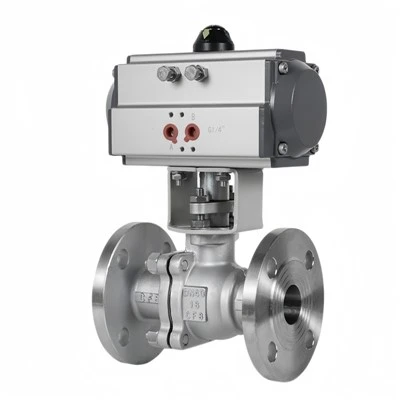
Pneumatic Ball Valve If you need a valve that can handle your line’s specific needs, feel free to reach out and connect with our team to discuss your requirements and find the perfect solution.
References
- “Valve Application Guidelines for Industrial Fluid Systems,” American Water Works Association, 2021.
- “Pulp and Paper Industry Valve Selection Best Practices,” TAPPI Press, 2019.
- “Industrial Valve Design and Performance,” CRC Press, 2020.
Minasen Automation Technology Co., Ltd.
As one of the most professional knife gate valve manufacturers in China, we have world-leading production equipment and strong manufacturing capabilities. Please rest assured to wholesale bulk durable knife gate valve made in China here from our factory. Welcome to contact us for customized service and OEM service.
Address: Building A-3, Marine Science and Technology Entrepreneurship Park, Yongxing Street, Longwan District, Wenzhou City, Zhejiang Province
E-mail: team02@minasenvalve.com
WebSite: https://www.minasenvalves.com/
